Diagnosing Vibrations at Highway Speed: Causes, Tests, and Fixes
You are driving on the highway, cruising at 60 or 70 mph, and you notice a vibration. Maybe it is in the steering wheel. Maybe it is in the seat. Maybe the whole car seems to shimmy. Whatever form it takes, a vibration at highway speed is your vehicle telling you that something is out of balance, worn, or damaged. Ignoring it will not make it go away, and in many cases the underlying cause will get worse over time.
This article covers the most common causes of highway-speed vibrations, how mechanics diagnose them, and what the typical repairs look like.
Tire Balance Problems
The most common cause of vibration at highway speed is an out-of-balance tire and wheel assembly. Every tire and wheel combination has slight variations in weight distribution. When a new tire is mounted, the technician adds small weights to the rim to compensate for those variations. If a wheel weight falls off, or if the tire wears unevenly, the assembly becomes unbalanced.
An unbalanced tire creates a vibration that increases with speed. It typically becomes noticeable around 50 to 60 mph and gets worse as you go faster. If the unbalanced tire is on the front axle, you will usually feel it in the steering wheel. If it is on the rear, you may feel it more through the seat or the floor of the vehicle.
The fix is straightforward: the shop removes the wheel, places it on a balancing machine, and adds or adjusts wheel weights until the assembly spins evenly. This is a routine service that typically costs between $15 and $25 per wheel. If you notice vibration developing gradually and it gets worse with speed, tire balance is the first thing to check.
Tire Condition Issues
Sometimes the problem is not balance but the tire itself. Several tire conditions can cause vibrations:
Flat spots. If a vehicle sits in one position for an extended period, the tires can develop flat spots where they contacted the pavement. These spots create a rhythmic vibration that may or may not go away as the tires warm up during driving. Temporary flat spots from overnight parking usually work themselves out in the first few miles. Permanent flat spots from extended storage may require tire replacement.
Belt separation. Inside every tire, steel belts provide structure and shape. If those belts shift or separate from each other, the tire develops a bump or irregularity that causes vibration. Belt separation is a serious condition because it can lead to tire failure. A tire with a separated belt may also show a visible bulge or wobble when spinning on a balancing machine. This tire needs to be replaced immediately.
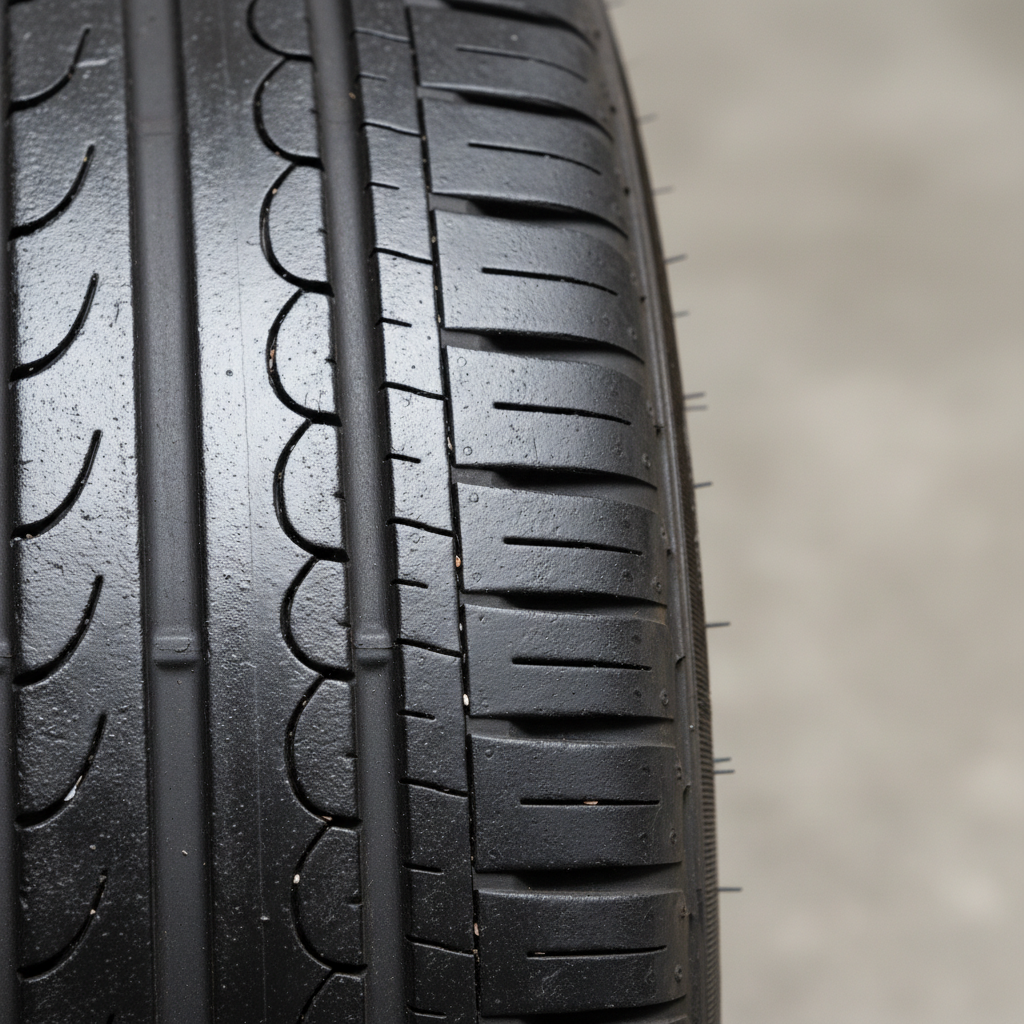
Uneven wear. Tires that have worn unevenly due to alignment problems, suspension issues, or lack of rotation develop an irregular surface that creates vibration and noise. Cupping, where the tread develops scalloped high and low spots, is particularly common on tires that have been driven with worn shocks or struts. Depending on the severity, the tire may need replacement or may improve with rotation and correction of the underlying cause.
Wheel Problems
The wheel itself can be a source of vibration if it has been bent or damaged. Hitting a pothole, curb, or road debris at speed can bend a wheel rim, creating a wobble that no amount of balancing will fix. A bent wheel is diagnosed by mounting it on a balancing machine or a dedicated runout gauge that measures how true it spins.
Minor bends in steel wheels can sometimes be repaired by a wheel repair specialist. Aluminum alloy wheels are more difficult to repair safely, and a significant bend usually means replacement. The cost varies widely depending on the wheel, from under $100 for a basic steel rim to several hundred for a factory alloy wheel.
Loose or improperly torqued lug nuts can also cause vibration. If a wheel is not seated flush against the hub, it will wobble slightly at speed. This is why proper torque specifications matter and why lug nuts should be checked after any wheel service. Most vehicles specify lug nut torque between 80 and 100 foot-pounds, though some trucks and SUVs may require more.
Brake-Related Vibrations
If the vibration occurs specifically when you apply the brakes, the issue is likely related to your brake rotors. Rotors that have developed thickness variation or warping from heat cause a pulsation through the brake pedal and sometimes through the steering wheel during braking.
This is different from a constant vibration that is present whether you are braking or not. A rotor-related vibration only appears when you step on the brake pedal and disappears when you release it. The pulsation may feel like the brake pedal is pushing back against your foot in a rhythmic pattern.
The solution depends on the rotor's condition. If there is enough material remaining above the minimum thickness specification, the rotors can be resurfaced on a lathe to restore a smooth, even surface. If the rotors are too thin or too damaged, they need to be replaced. Rotor resurfacing costs significantly less than replacement, which is one reason regular brake inspections matter. Catching the problem early preserves your options.
Suspension and Steering Components
Worn suspension and steering parts can amplify vibrations or create their own. Tie rod ends, ball joints, control arm bushings, and wheel bearings all play a role in keeping your wheels aligned and spinning smoothly. When these components wear out, they allow play in the system that manifests as vibration, wandering, or noise.
Wheel bearings deserve special attention. A failing wheel bearing produces a humming or roaring noise that changes with vehicle speed and may change pitch when you turn. In advanced stages, it can cause vibration and wheel wobble. Wheel bearing failure is a safety issue because a completely failed bearing can cause the wheel to separate from the vehicle.
Worn suspension bushings, particularly in the control arms and sway bar links, can allow enough movement to create vibration at speed. These components are made of rubber and deteriorate over time, especially in climates with extreme temperatures.
Drivetrain Causes
On rear-wheel-drive and all-wheel-drive vehicles, the driveshaft transfers power from the transmission to the rear axle. The driveshaft has universal joints (U-joints) at each end that allow it to flex as the suspension moves. Worn U-joints create a vibration that is typically felt through the floor of the vehicle and increases with speed. In some cases, you may also notice a clunking noise when shifting between drive and reverse.
CV joints on front-wheel-drive vehicles serve a similar purpose. While CV joint failure more commonly produces a clicking noise during turns, a severely worn inner CV joint can cause vibration during acceleration at highway speed.
How Shops Diagnose the Cause
A good diagnostic process for highway vibration starts with a road test. The technician will drive the vehicle at various speeds, noting when the vibration starts, when it peaks, and whether it changes with braking, acceleration, or turning. These details narrow down the possibilities significantly.
Back in the shop, the technician will typically start with the most common cause: tire balance. Each wheel is placed on a balancing machine to check for imbalance and to look for signs of tire irregularity like belt separation. They will also inspect the tires visually for uneven wear, bulges, and damage.
If balancing does not resolve the issue, the technician moves to wheels, then suspension components, then drivetrain. Each step involves specific tests: runout gauges for wheels, play testing for suspension joints, and visual inspection of boots and fluid leaks for CV and U-joints.
What to Expect for Cost
The cost to fix highway vibration depends entirely on the cause. Tire balancing is the least expensive at $60 to $100 for all four wheels. A single tire replacement ranges from $100 to $300 depending on the tire. Wheel replacement varies widely. Brake rotor resurfacing typically costs $30 to $50 per rotor, while replacement runs $150 to $400 per axle with labor. Suspension components like tie rod ends and ball joints range from $200 to $600 per component installed. Wheel bearing replacement typically costs $300 to $700 per bearing.
The key takeaway is that early diagnosis saves money. A vibration caused by a simple balance issue costs very little to fix. The same vibration ignored for months, while uneven tire wear develops and compounds the problem, can end up requiring new tires and suspension work. Do not wait for a highway vibration to go away on its own. It will not.