What a Thorough Brake Inspection Involves and How to Read the Results
Your brakes are arguably the most important safety system on your vehicle. They are the difference between a controlled stop and a collision. Yet most drivers have never seen a detailed brake inspection report and would not know how to interpret one if they did. This guide walks you through what a proper brake inspection includes, what the measurements mean, and how to use that information to make smart decisions about your brake service.
What Gets Inspected During a Brake Check
A thorough brake inspection is not just a quick look through the wheel spokes. It requires removing the wheels to get direct access to the brake components. Here is what a quality shop will check on each corner of the vehicle:
Brake pads or shoes. These are the friction material that presses against the rotor or drum to slow your vehicle. They wear down over time and eventually need replacement. The technician measures their remaining thickness in millimeters using a brake gauge or caliper tool. New brake pads typically start at 10 to 12mm thick, depending on the vehicle and the pad manufacturer.
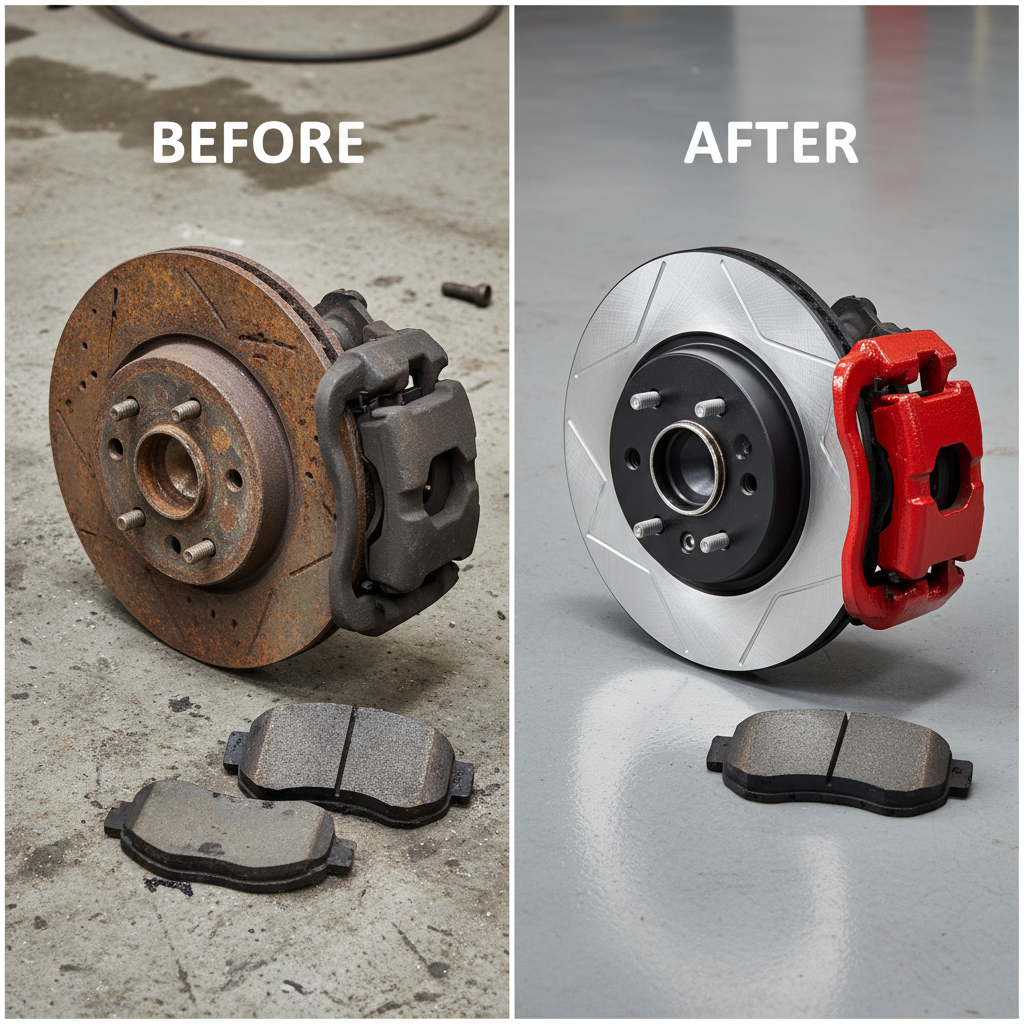
Rotors or drums. The rotor is the flat metal disc that the brake pad clamps against. Over time, rotors develop wear grooves, and their thickness decreases. The technician measures rotor thickness with a micrometer and checks for runout, which is a measurement of how true the rotor spins. Excessive runout causes brake pulsation, that rhythmic vibration you feel through the brake pedal when stopping.
Calipers and hardware. The caliper is the mechanism that squeezes the brake pad against the rotor. Technicians check for caliper slide pin movement, seal condition, and signs of leaking brake fluid. The hardware includes clips, springs, and shims that keep the pads positioned correctly and reduce noise.
Brake lines and hoses. The hydraulic lines carry brake fluid from the master cylinder to each caliper. Metal lines are checked for corrosion and damage. Rubber hoses are checked for cracking, swelling, and deterioration. A failing brake hose can cause uneven braking or total brake loss on that corner.
Brake fluid condition. Brake fluid absorbs moisture over time, which lowers its boiling point and reduces braking performance under heavy use. Some shops test the fluid's moisture content with an electronic tester and report the boiling point. Fresh DOT 4 brake fluid has a dry boiling point around 230 degrees Celsius. Once it drops below 180 degrees, most shops will recommend a fluid exchange.
Understanding Brake Pad Measurements
Brake pad thickness is the most common measurement you will see on an inspection report. Here is a general guide to what those numbers mean:
8mm or more: Good condition. No action needed. This is typically reported as green on a color-coded inspection.
5mm to 7mm: Starting to wear. No immediate concern, but you should plan for replacement in the coming months. This range is usually reported as yellow, meaning it deserves monitoring.
3mm to 4mm: Getting low. You should schedule brake service soon. At this thickness, most shops will recommend replacement because waiting longer risks rotor damage and reduced stopping performance.
2mm or less: Replace now. At this point, the friction material is nearly gone, and continued driving risks metal-on-metal contact between the backing plate and the rotor. This damages the rotor and dramatically increases your repair cost. This is always reported as red, meaning immediate attention is needed.
Keep in mind that front brakes typically wear faster than rear brakes because most vehicles use front-biased braking. It is common to see front pads at 4mm while the rears still have 7mm remaining. That asymmetry is normal.
Rotor Thickness and Condition
Rotors have a minimum thickness specification stamped or cast into them by the manufacturer. This number, often called the "discard thickness" or "minimum machine thickness," represents the point at which the rotor no longer has enough metal to safely dissipate heat during braking.
When your technician measures your rotors, they are comparing the current thickness to this specification. If the rotor is above the minimum, it can potentially be resurfaced (machined smooth) and reused. If it is at or below the minimum, it must be replaced.
Rotor condition matters beyond just thickness. Deep grooves, heat spots (blue or dark discoloration), and cracks all affect braking performance. A rotor with visible cracks should always be replaced regardless of its thickness measurement.
What Your Inspection Report Should Include
A professional brake inspection report should give you specific information, not vague statements. Here is what to look for:
Measurements for each corner of the vehicle, not just an overall summary. Your left front brake pad might be at 6mm while your right front is at 4mm. That difference matters, and it might indicate a caliper issue that should be addressed along with the pad replacement.
Photos of the actual components. A picture of your brake pad next to a ruler or gauge is worth more than a paragraph of explanation. Good shops include these as standard practice using digital inspection tools.
A clear recommendation tied to the findings. Instead of just saying "brakes need service," a good report will say something like "front brake pads at 3mm, recommend replacement within 30 days" or "rear rotors below minimum thickness at 22.1mm versus 22.4mm specification, replacement required with next pad service."
Cost estimates for the recommended work, broken down into parts and labor. You should know exactly what you are approving before any work begins.
How Often Should Brakes Be Inspected
Most manufacturers recommend a brake inspection every 12,000 to 15,000 miles or at least once per year. However, several factors can accelerate brake wear and justify more frequent checks:
City driving with frequent stops wears brakes faster than highway driving. If your daily commute involves heavy traffic with constant braking, your pads will wear down more quickly than someone who primarily drives on open roads.
Hilly terrain increases brake use because you rely on your brakes more during descents. Drivers in mountainous areas may need inspections more frequently.
Towing or carrying heavy loads puts extra strain on the entire braking system. If you regularly tow a trailer or carry heavy cargo, factor that into your inspection schedule.
Driving style matters too. Aggressive braking, where you brake hard and late rather than gradually, generates more heat and wears pads faster.
Warning Signs Between Inspections
Between formal inspections, pay attention to changes in your braking experience. A high-pitched squealing noise often comes from a wear indicator, a small metal tab built into the pad that contacts the rotor when the pad reaches a certain thinness. That squeal is by design. It is telling you to schedule service.
Grinding noise is more serious. It typically means the pad friction material is completely gone and the metal backing plate is contacting the rotor directly. This damages the rotor and increases repair costs significantly. If you hear grinding, schedule service immediately.
Pulsation or vibration through the brake pedal usually indicates rotor issues, either warping from heat or thickness variation from uneven wear. This does not always require immediate action, but it should be evaluated at your next service visit.
A soft or spongy brake pedal that travels farther than usual before the brakes engage could indicate air in the brake lines, a fluid leak, or a failing master cylinder. This is a safety concern that warrants prompt attention.
Using This Information at the Shop
The next time you receive a brake inspection report, you will know what to look for. Check the measurements against the ranges above. Ask for photos if they are not already included. Compare the recommendation to the numbers and make sure they align. If a shop recommends immediate brake replacement but your pads are at 6mm, ask why. There may be a good reason, such as an upcoming road trip or a rotor issue, but you deserve an explanation.
Remember that a good shop welcomes these questions. Technicians who do thorough work are proud of their inspections and happy to walk you through the findings. If a shop cannot or will not explain their recommendation in specific terms, that tells you something about their standards.