How Neglected Suspension Wear Creates a Cascade of Expensive Problems
Suspension problems are uniquely deceptive. Unlike a flat tire or a dead battery, suspension wear happens gradually. Your vehicle rides a little rougher this month than last month, but since you drive it every day, you adapt without noticing. The road feels bumpier. The car leans a little more in turns. You hear an occasional clunk over speed bumps. Each change is small enough to dismiss, but collectively they signal a system that is deteriorating and creating damage in other areas of your vehicle.
This article explains why suspension problems compound when left unaddressed and how a relatively minor worn component can lead to much more expensive repairs down the road.
How Your Suspension System Works
Your vehicle's suspension is a collection of components that work together to keep your tires in contact with the road, absorb impacts from road imperfections, and maintain stable handling during turns, braking, and acceleration. The main components include:
Shocks and struts. These dampen the spring oscillation and control how quickly your suspension compresses and rebounds. Without functioning shocks, your vehicle would bounce repeatedly after every bump. Shocks do not support the vehicle's weight. They control the rate of movement. Struts combine a shock absorber and a structural support into a single assembly.
Springs. Coil springs, leaf springs, or torsion bars support the vehicle's weight and allow the suspension to flex over bumps. Springs rarely fail outright, but they can sag over time, lowering your ride height and changing suspension geometry.
Control arms and bushings. Control arms connect the wheel assembly to the vehicle frame. Bushings are the rubber or polyurethane inserts at each pivot point that allow controlled movement while absorbing vibration. When bushings wear out, the control arm gains excessive play, which affects alignment and causes clunking noises.
Ball joints. These are the pivot points that allow the steering knuckle to move up and down with the suspension while also turning left and right for steering. Ball joints carry a significant portion of the vehicle's weight (on some designs) and are a critical safety component. A severely worn ball joint can separate entirely, which causes the wheel to collapse inward and makes the vehicle undrivable.
Tie rod ends. These connect the steering rack to the steering knuckle and transmit your steering input to the wheels. Worn tie rod ends create play in the steering, causing wandering and uneven tire wear.
Sway bar links and bushings. The sway bar (stabilizer bar) connects the left and right sides of the suspension and reduces body roll during turns. The links and bushings that attach it wear out over time and are among the most common sources of suspension clunking noises.
The Cascade Effect: How One Problem Creates Others
Suspension components do not fail in isolation. When one component wears out, it changes how forces are distributed across the rest of the system, accelerating wear on parts that would otherwise last much longer. Here are some common cascades:
Worn shocks lead to tire cupping. When shocks lose their damping ability, the tire bounces slightly as it rolls down the road instead of maintaining consistent contact with the pavement. This bouncing creates a scalloped wear pattern called cupping, where alternating high and low spots develop around the tread. Cupping is noisy, reduces traction, and shortens tire life significantly. Replacing the shocks does not fix the already-cupped tires. You end up paying for shocks and new tires, when replacing the shocks earlier would have preserved the tires.
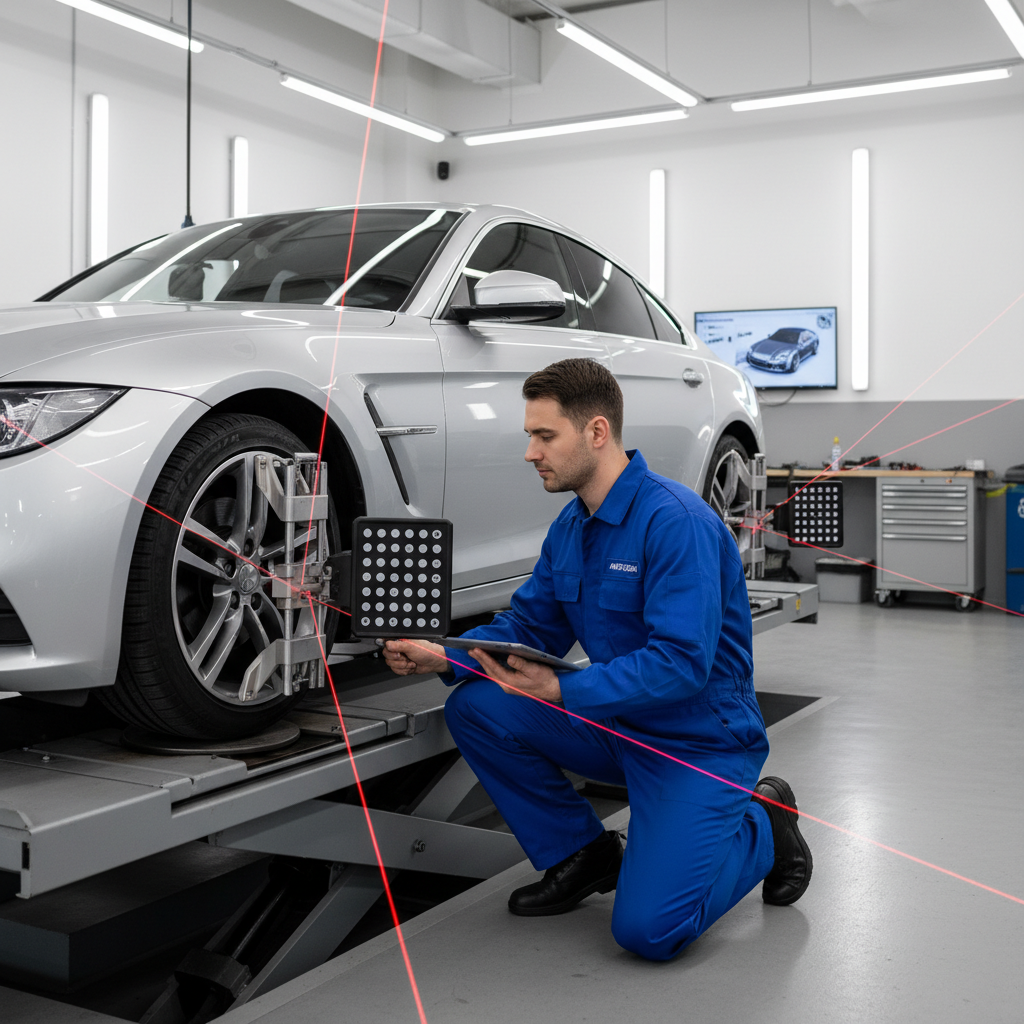
Worn bushings throw off alignment. When control arm bushings deteriorate, the control arm can shift position under load. This changes the wheel alignment angles, particularly camber and toe, which causes accelerated inner or outer edge tire wear. Getting an alignment with worn bushings is a temporary fix at best because the bushings will allow the alignment to shift as soon as you drive over a bump. The correct approach is to replace the bushings first, then align the vehicle.
Worn ball joints accelerate tire and suspension wear. A ball joint with excessive play allows the steering knuckle to move in ways it should not. This creates inconsistent alignment angles that change under load, wearing tires unevenly and putting extra stress on tie rod ends and wheel bearings. A $200 ball joint replacement deferred can turn into $200 for the ball joint plus $150 for a tie rod end plus $400 for a wheel bearing plus the cost of a premature tire replacement.
Sagging springs change ride geometry. When springs lose their height, the entire suspension geometry changes. Camber angles shift, caster angles change, and the vehicle may sit unevenly side to side. This affects handling, braking stability, and tire wear. It can also cause the vehicle to bottom out on bumps that it used to handle easily, which damages other underbody components.
Recognizing Suspension Wear
Because suspension wear is gradual, you need to know what to look and listen for. Here are the most common signs:
Clunking or knocking over bumps. This is the most obvious symptom and usually points to worn sway bar links, ball joints, or control arm bushings. The noise comes from metal-on-metal contact where the worn component allows excessive movement.
Vehicle pulls to one side. While this can be a simple alignment issue, it can also indicate a worn suspension component that is allowing one side to ride differently than the other. If an alignment does not fix the pull, suspension components should be inspected.
Excessive body roll in turns. If your vehicle leans noticeably more than it used to during turns, the sway bar system, shocks, or springs may be worn. This affects handling stability and can be a safety concern during emergency maneuvers.
Nose dive during braking. When the front of the vehicle dips dramatically during hard braking, the front shocks or struts have likely lost their damping ability. This transfers weight forward excessively, increasing stopping distance and reducing rear-wheel traction.
Rough or bouncy ride. If your vehicle bounces more than once after hitting a bump, the shocks or struts are not doing their job. A simple bounce test (pushing down on one corner of the vehicle and releasing) should result in the vehicle returning to its normal position within one or two oscillations. If it bounces three or more times, the shocks need attention.
Uneven tire wear. This is often the first tangible evidence of a suspension problem. Cupping, inner edge wear, outer edge wear, and feathering patterns all point to specific suspension and alignment issues. Checking your tire wear regularly is one of the best ways to catch suspension problems early.
The Financial Case for Early Repair
Here is a realistic cost comparison. A pair of front sway bar links costs roughly $150 to $250 installed. If you ignore the clunking noise and the worn links allow the sway bar to stress the sway bar bushings and affect alignment, you might add another $100 for bushings, $100 for an alignment, and potentially $300 to $600 for premature tire replacement due to the alignment issues.
A pair of front struts costs $400 to $800 installed depending on the vehicle. Deferring that repair while the worn struts cause tire cupping adds $400 to $1,000 for premature tire replacement. If the bouncing also accelerates wear on ball joints or tie rod ends, add another $200 to $600 per component.
The pattern is consistent: the original repair plus the collateral damage always costs more than the original repair alone. And the longer you wait, the more collateral damage accumulates.
What to Do When Suspension Problems Are Found
When a shop identifies worn suspension components, ask for specific information. Which components are worn? What are the symptoms? What is the urgency level? Are there other components that should be inspected or replaced at the same time to avoid paying for alignment twice?
It is reasonable to prioritize safety-critical components like ball joints and tie rod ends over comfort-related items like sway bar links. But do not defer everything indefinitely. Each worn component is putting stress on the rest of the system. Create a plan to address findings within a reasonable timeframe, and make sure the shop documents the current condition so you can track changes over time.
If you are planning tire replacement, always address known suspension issues first. Putting new tires on a vehicle with worn suspension components is throwing money away because the new tires will begin wearing unevenly immediately.