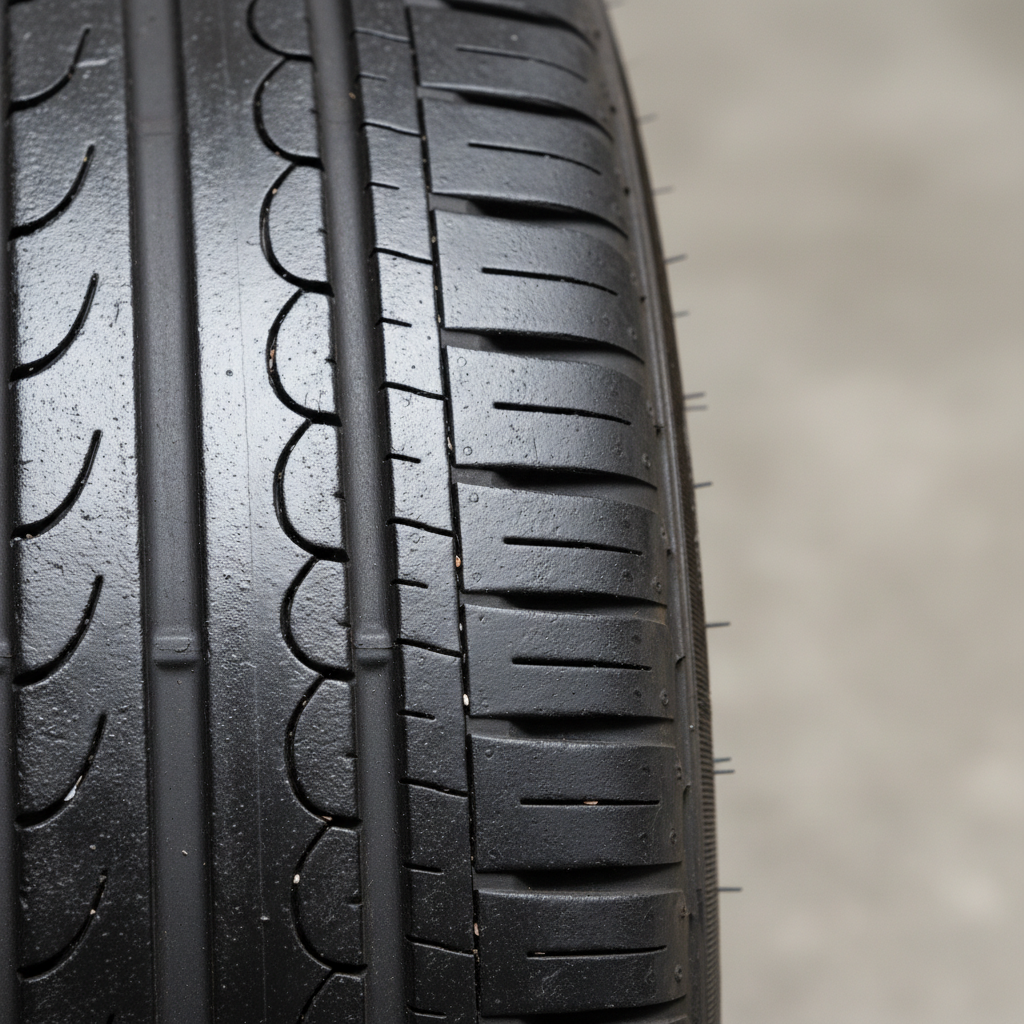
The Relationship Between Wheel Alignment and Tire Life
A set of quality tires should last 40,000 to 70,000 miles depending on the tire, the vehicle, and driving conditions. But a vehicle with bad alignment can burn through that same set of tires in 10,000 to 15,000 miles or even less. The math is painful. A $600 set of tires that should last four years might last one year because of an alignment problem that would have cost $100 to fix. This article explains how alignment works, how misalignment destroys tires, and how to protect your investment.
What Wheel Alignment Actually Means
Wheel alignment is the process of adjusting the angles at which your wheels contact the road. These angles are specified by the vehicle manufacturer and are designed to optimize tire wear, handling stability, and straight-line tracking. When these angles are within specification, your tires wear evenly and your vehicle drives straight. When they are out of specification, your tires wear unevenly and your vehicle may pull, wander, or feel unstable.
There are three primary alignment angles that matter:
Toe. Toe describes whether the front edges of the wheels point toward each other (toe-in) or away from each other (toe-out) when viewed from above. Think of it like your feet: if your toes point inward, that is toe-in. If they point outward, that is toe-out. Toe is the alignment angle that causes the most rapid tire wear when it is out of specification. Even a small toe error scrubs the tire sideways with every rotation, wearing the tread in a feathered pattern that shortens tire life dramatically.
Camber. Camber describes the tilt of the wheel when viewed from the front of the vehicle. If the top of the wheel tilts outward, that is positive camber. If it tilts inward, that is negative camber. Camber errors cause one edge of the tire to carry more load than the other, wearing that edge faster. Excessive negative camber wears the inner edge. Excessive positive camber wears the outer edge.
Caster. Caster describes the angle of the steering axis when viewed from the side of the vehicle. It primarily affects steering feel and straight-line stability rather than tire wear directly. However, unequal caster side to side can cause the vehicle to pull toward the side with less caster, which can indirectly contribute to uneven wear if the driver constantly compensates by holding the steering wheel off-center.
How Misalignment Wears Tires
Every alignment angle that is out of specification creates a force on the tire that works against normal, even wear. Here is how each type of misalignment damages tires:
Toe misalignment creates a scrubbing action. When wheels are pointed even slightly in the wrong direction, each tire is being dragged sideways to some degree with every rotation. Imagine dragging a rubber eraser across a table at a slight angle instead of rolling it straight. The friction from that sideways motion wears the tread in a feathered pattern, where one side of each tread block is higher than the other. Toe is the fastest tire killer because the scrubbing happens continuously across the entire tread surface.
A toe error of just 0.1 degree from specification can reduce tire life by thousands of miles. Larger errors can make a new tire look like it has 20,000 miles of wear in just a few thousand miles. Toe misalignment also increases rolling resistance, which reduces fuel economy.
Camber misalignment creates edge loading. When a wheel tilts, one side of the contact patch carries more weight than the other. The overloaded edge wears faster while the underloaded edge wears slower. Over time, you end up with a tire that has 2mm of tread on one edge and 8mm on the other. That tire is effectively worn out even though half of it still has plenty of tread.
Negative camber, where the top of the wheel tilts inward, is more common and more problematic because the resulting inner edge wear is hard to see. The worn edge faces the center of the vehicle, away from the driver's normal line of sight. Many drivers do not discover inner edge wear until it is severe, sometimes until the inner edge has worn to the steel cords while the outer edge still looks fine.
Combined errors multiply the damage. A vehicle with both toe and camber out of specification will experience compounded wear. The toe scrubs the tread in one pattern while the camber overloads one edge, creating accelerated and complex wear that can render a tire useless in a fraction of its expected lifespan.
What Causes Alignment to Go Out of Specification
Several events and conditions can change your alignment angles:
Hitting a pothole or curb. A hard impact can bend suspension components or shift them from their factory positions. A single bad pothole hit can knock your alignment out enough to cause visible tire wear within a few hundred miles.
Worn suspension components. Ball joints, tie rod ends, control arm bushings, and other suspension parts wear over time. As they develop play, the alignment angles shift because the components can no longer hold the wheels in their specified positions. This is why a good alignment shop will inspect suspension components before performing an alignment. Aligning a vehicle with worn bushings is futile because the angles will shift again as soon as the bushings flex under driving loads.
Springs sagging. As springs lose height over time, ride height changes, which changes the camber and caster angles. Lowered vehicles, whether from sagging springs or aftermarket lowering kits, often require alignment adjustments to compensate for the changed geometry.
Normal driving. Even without a specific event, alignment can drift over time as rubber bushings settle and components experience normal wear. This is why manufacturers recommend periodic alignment checks even when nothing specific has happened.
Signs Your Alignment Is Off
The vehicle pulls to one side. If you have to hold the steering wheel slightly off-center to drive straight, or if the vehicle drifts to one side on a flat road, the alignment is likely off. Note that road crown, where the road surface is slightly higher in the center than at the edges for water drainage, can cause a slight pull to the right. This is normal. A strong pull, especially to the left, is not.
The steering wheel is off-center. If the steering wheel is not centered when driving straight, the toe is adjusted unevenly between the two front wheels. This is a common and easy-to-fix alignment issue.
Uneven tire wear. This is often the first hard evidence of an alignment problem. Inner edge wear, outer edge wear, and feathered wear patterns all point to specific alignment issues as described in the section above. Check your tires monthly for these patterns.
Vehicle feels unstable. Wandering at highway speed, a vague feeling in the steering, or the sense that the vehicle does not track straight can all indicate alignment issues, particularly when combined with worn suspension components.
When to Get an Alignment
Get an alignment check in any of these situations: after hitting a significant pothole or curb, when installing new tires, after any suspension component replacement, when you notice uneven tire wear, when the vehicle pulls or the steering wheel is off-center, and at least once per year as part of routine maintenance.
An alignment check at most shops costs $80 to $120. A full four-wheel alignment adjustment costs $100 to $180. Compare that to the $500 to $1,000 cost of replacing tires that were destroyed by misalignment. Regular alignment maintenance is one of the highest-return investments you can make in your vehicle.
The Correct Sequence: Suspension First, Then Alignment, Then Tires
If your vehicle has worn suspension components and needs new tires, the repair sequence matters. Replace the worn suspension components first, then perform the alignment, then install the new tires. This sequence ensures that the alignment is set on components that will hold it, and the new tires start their life on a properly aligned vehicle.
Installing new tires before addressing suspension and alignment issues is the most expensive mistake you can make. Those new tires will begin wearing abnormally from the first mile. By the time you get around to the alignment, the damage may already be significant enough to shorten the tires' useful life by thousands of miles.
If budget constraints prevent doing everything at once, address the suspension components and alignment first, even if it means continuing on the old tires temporarily. Old tires that are wearing unevenly will continue to wear unevenly regardless, but at least the new tires you eventually install will start on a solid foundation.