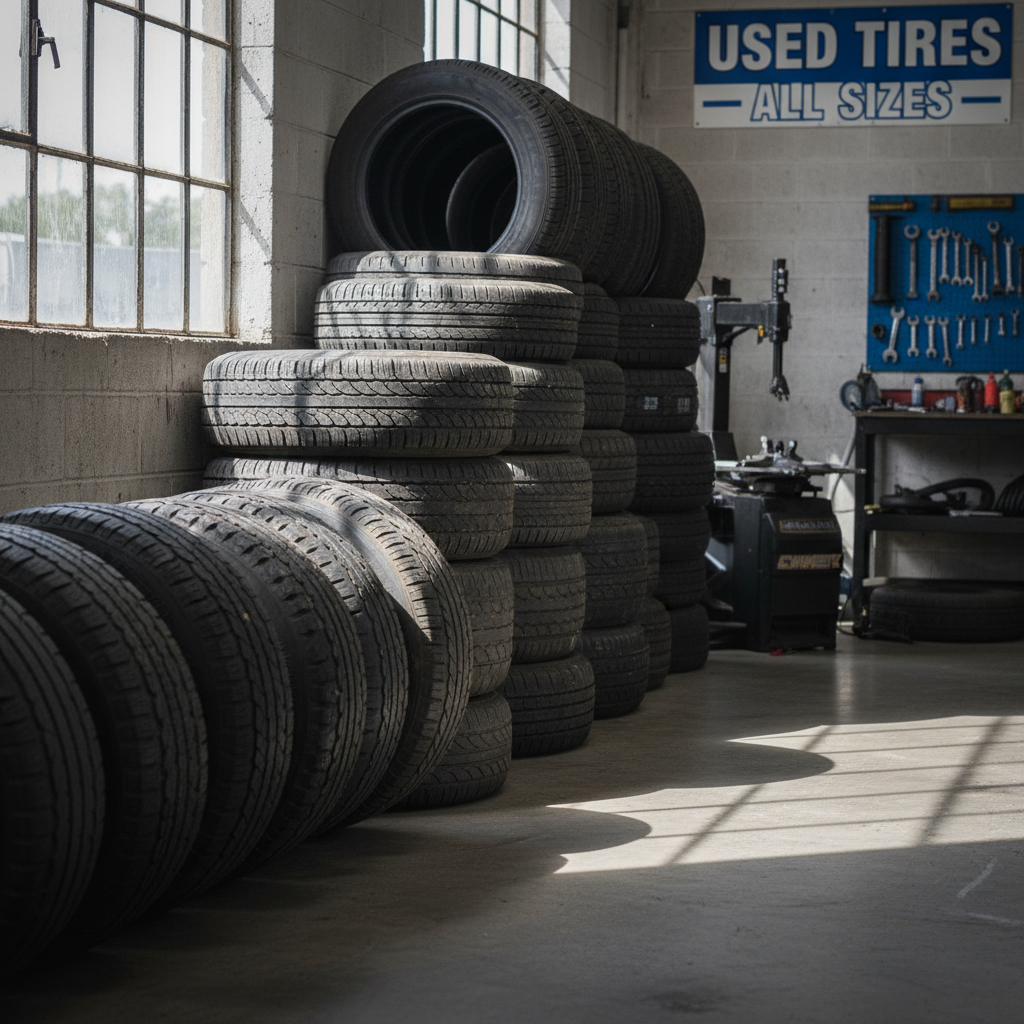
The Unregulated Used Tire Market and the Safety Risks It Creates
Used tires are a massive market. Millions of used tires are sold each year in the United States, and for many drivers on tight budgets, they represent the only affordable option when a tire fails. The problem is that this market operates with minimal regulation in most states. There are no federal laws requiring used tire sellers to inspect their inventory, disclose defects, or reject tires that are dangerous. The result is that tires which should have been recycled or disposed of end up back on vehicles, driving on public roads, putting their owners and everyone around them at risk.
What Makes a Used Tire Unsafe
Not all used tires are dangerous. A tire with good tread, no structural damage, and a recent manufacture date can be a reasonable option for a budget-conscious buyer. But many used tires fail one or more critical safety criteria, and sellers are not always forthcoming about these issues. Here are the conditions that make a used tire unsafe for continued use:
Age beyond safe limits. As covered in detail in our article on tire age vs. tread depth, tire rubber degrades over time regardless of use. A used tire that is six or more years old from its manufacture date carries elevated risks of tread separation and reduced traction, even if the tread looks adequate. Many used tire shops stock tires that are seven, eight, or even ten years old without disclosing the age to buyers.
Previous repairs in unsafe locations. Tire industry standards, as defined by the Tire Industry Association and the Rubber Manufacturers Association, specify that repairs are only safe in the tread area, specifically the central portion of the tread that contacts the road. Repairs in the sidewall or near the shoulder of the tire are not considered safe because these areas flex too much to maintain a reliable seal. Used tires with shoulder plugs, sidewall patches, or repairs in other non-serviceable areas should never be resold.
Sidewall damage. Cuts, gouges, bubbles, and bulges in the sidewall all indicate structural compromise. A sidewall bulge means the internal body plies have separated, and a blowout can occur at any time. Deep cuts or gouges may have penetrated to the body plies even if no bulge is visible. Any sidewall damage beyond superficial scuffing makes a tire unsafe.
Exposed or visible cords. If you can see the fabric or steel cords through the rubber anywhere on the tire, whether in the tread or sidewall, the tire is worn or damaged beyond any safe limit. Cords become visible when the rubber layer over them has been worn through completely. A tire in this condition has zero margin for error and is at immediate risk of failure.
Belt separation signs. Steel belt separation inside the tire may show as a visible bulge or bump in the tread area, a wobble when the tire spins, or an irregular lump you can feel by running your hand over the tread. Belt separation is a precursor to tread separation, where the outer tread layer detaches from the tire at speed. This is one of the most dangerous tire failures possible.
Bead damage. The bead is the inner edge of the tire that seats against the wheel rim. It is reinforced with steel wire and must maintain a precise shape to seal against the rim and hold air pressure. Bead damage from improper mounting, driving on a flat, or running over debris can prevent the tire from sealing properly or cause it to unseat from the rim during driving. Bead damage is often invisible until the tire is mounted and inflated.
Tread depth below safe minimums. The legal minimum tread depth in most states is 2/32 of an inch, but practical safety diminishes well before that point. A used tire with 3/32 or 4/32 of tread remaining has very little life left and significantly reduced wet-weather performance. Selling a tire at this tread depth as a money-saving option ignores the fact that the buyer will need to replace it again very soon.
Why Regulation Is Lacking
Only a handful of states have laws specifically addressing used tire sales. Most states have no requirements for inspection, disclosure, or minimum safety standards for used tires. This means that a used tire shop can legally sell a tire that is ten years old with a sidewall repair and near-minimum tread depth in most jurisdictions. The buyer assumes the risk with no legal protection in most cases.
The lack of regulation exists partly because the used tire market serves a population that may have no other affordable option. Banning used tire sales entirely would leave many low-income drivers unable to replace a failed tire, which creates its own safety problem. The challenge is creating standards that protect consumers without eliminating access. Some states have begun addressing this with laws requiring minimum tread depth for used tire sales and prohibiting the sale of tires with visible damage, but enforcement varies widely.
The Recall Problem
Tire recalls are more common than most people realize. When a manufacturer identifies a defect in a batch of tires, they issue a recall through NHTSA. Owners of vehicles equipped with those tires are notified, and the tires are replaced at no cost. But when a recalled tire is removed from the original vehicle, it may enter the used tire stream instead of being properly destroyed. Used tire sellers are generally not required to check their inventory against recall databases. A buyer could easily purchase a recalled tire without either party knowing.
You can check whether a specific tire has been recalled by searching the NHTSA recall database with the tire's DOT code. This takes a few minutes and is worth the effort for any used tire purchase.
How Used Tire Sellers Acquire Their Inventory
Understanding the supply chain helps explain why unsafe tires end up on the market. Used tire sellers acquire inventory from several sources:
Tire shops and dealerships. When a customer buys new tires, the old tires are removed. If those tires still have usable tread, the shop may sell them to a used tire buyer or keep them for resale. The quality of these tires depends entirely on the shop's standards for what they will sell versus what they scrap.
Salvage yards and auctions. Tires from salvaged vehicles, repossessed vehicles, and fleet disposal enter the used market. These tires may have been on vehicles involved in accidents, and the impact forces that damaged the vehicle may have also damaged the tires in ways that are not visible externally.
Tire recycling facilities. Some tires that arrive at recycling facilities for processing are pulled out and redirected to the used tire market instead. This can include tires that were sent for recycling specifically because they were deemed unsafe by a shop.
The most reputable used tire sellers inspect their inventory carefully and reject tires that do not meet safety standards. But there is no requirement to do so, and the financial incentive is to sell as many tires as possible with minimal overhead for inspection and quality control.
Protecting Yourself
If you need to buy used tires, take these steps to protect yourself:
Check the DOT date code on every tire. Reject any tire older than six years from its manufacture date. For instructions on finding and reading the date code, see our guide on how to read a tire date code.
Inspect the tire thoroughly. Look at both sidewalls for cuts, bulges, and deep cracks. Check the tread for exposed cords, uneven wear, and signs of previous repairs. Run your hand over the tread to feel for lumps or irregularities that might indicate belt separation.
Check for previous repairs. Look for plugs in the tread, patches on the interior (ask the seller to show you the inside of the tire), and any repair material in the shoulder or sidewall area.
Check the NHTSA recall database using the tire's DOT code to ensure it has not been recalled.
Measure the tread depth yourself with a tread depth gauge (available at any auto parts store for a few dollars) rather than taking the seller's word for it. Measure at multiple points across the width and around the circumference to check for uneven wear.
For a complete step-by-step checklist, see our guide on what to ask before buying used tires.
When Used Tires Make Sense and When They Do Not
A used tire with a recent manufacture date, good tread depth, no structural damage, no history of repair, and even wear can be a reasonable option for a driver who needs an affordable replacement. But the savings only make sense if the tire is genuinely safe. A $40 used tire that blows out on the highway is not a bargain. A $40 used tire that lasts 15,000 miles before needing replacement is a reasonable value. The difference between those two outcomes comes down to inspection and knowledge. Know what to check, check it every time, and walk away from any tire that does not pass.