Why Tread Depth Alone Does Not Tell You If a Tire Is Safe
Most drivers judge their tires by a single metric: how much tread is left. If the tread looks good, the tire must be fine. This assumption is dangerously incomplete. Tire rubber degrades over time regardless of how much it has been driven. A tire that has been sitting in a garage for eight years with full tread depth can be more dangerous than a tire with moderate wear that is only two years old. Understanding why age matters and how to check it can prevent a tire failure that no amount of tread depth could have predicted.
How Rubber Degrades Over Time
Tire rubber is a complex compound of natural and synthetic rubber, carbon black, silica, sulfur, and various chemical additives. These compounds are designed to provide grip, resist wear, and maintain flexibility under the stress of driving. But they are not permanent. From the moment a tire is manufactured, several degradation processes begin.
Oxidation. Exposure to oxygen causes the polymer chains in rubber to break down. This process happens even when the tire is not being used. It accelerates with exposure to heat, sunlight, and ozone. Oxidized rubber becomes harder and more brittle, losing the flexibility that allows it to conform to the road surface and provide traction.
UV degradation. Ultraviolet radiation from sunlight breaks down the chemical bonds in rubber. Tires contain UV inhibitors to slow this process, but these additives are consumed over time. Tires stored outdoors or on vehicles parked in direct sunlight degrade faster than those stored in climate-controlled environments.
Plasticizer migration. The chemical plasticizers that keep rubber flexible gradually migrate out of the compound over time. This is partly what causes the visible cracking on old tires. As plasticizers leave, the rubber becomes stiffer and less capable of providing grip, particularly in wet conditions where flexibility is essential for the tire to squeegee water out from under the contact patch.
What Happens When a Tire Ages Out
The effects of aging are not immediately obvious. An old tire may look perfectly normal from a distance. It may even pass a visual inspection focused only on tread depth. But the changes in the rubber compound affect performance in critical ways.
Reduced wet traction. Aged rubber does not conform to the road surface as well as fresh rubber, which means less contact area and less grip, particularly on wet roads. Studies have shown that tires as young as four years old can show measurable reductions in wet braking performance compared to identical tires tested when new.
Increased risk of tread separation. As the rubber and bonding agents between the tire's layers degrade, the risk of tread separation increases. Tread separation is when the outer tread layer separates from the tire's internal structure, often at highway speed. This can cause sudden loss of vehicle control and has been responsible for numerous accidents and fatalities. The Ford Explorer and Firestone tire incidents of the early 2000s brought this issue into public awareness, but the underlying problem applies to all tires as they age.
Sidewall cracking. Visible cracking in the tire sidewall or between tread blocks is one of the more obvious signs of age-related deterioration. Fine cracks, sometimes called weather checking, indicate that the rubber is drying out. Deep or extensive cracking means the tire's structural integrity is compromised. A tire with significant sidewall cracking should be replaced regardless of tread depth.
What the Experts Recommend
There is no single universal age limit for tires, but several organizations have published guidelines:
Most tire manufacturers recommend replacement at six years from the date of manufacture, regardless of tread depth or appearance. Some manufacturers specify up to ten years as an absolute maximum, but recommend inspection by a tire professional after six years.
The National Highway Traffic Safety Administration (NHTSA) recommends following the tire manufacturer's guidance and states that tires age even when not in use. NHTSA notes that spare tires are subject to the same aging concerns as tires in active service.
The Rubber Manufacturers Association recommends that consumers follow the specific recommendations of the tire manufacturer. Most European vehicle manufacturers specify a maximum tire age of six years from the date of manufacture.
A reasonable guideline for most drivers: have tires inspected by a professional after five years and consider replacement at six years from the manufacture date regardless of remaining tread depth. At ten years, replacement is mandatory regardless of any other factor.
How to Check Tire Age
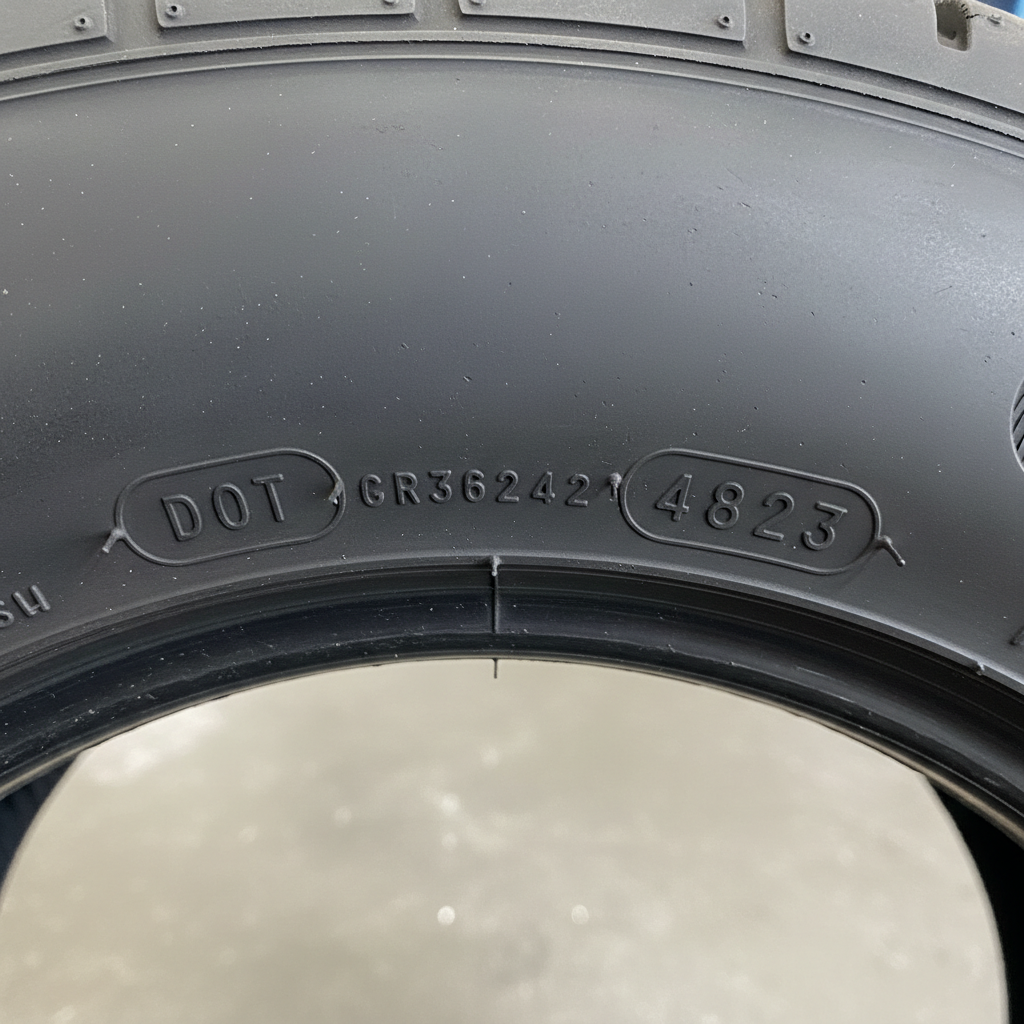
Every tire has a DOT code stamped on the sidewall that includes the date of manufacture. The last four digits of the DOT code represent the week and year the tire was made. For example, a code ending in 2321 means the tire was manufactured in the 23rd week of 2021.
The full DOT code is typically found on one side of the tire. If you see a partial code on the outer sidewall, the full code with the date may be on the inner sidewall, which is harder to read without lifting the vehicle. For a detailed guide on finding and reading this code, see our article on how to read a tire date code.
Tread Depth Still Matters
Nothing in this article suggests that tread depth is unimportant. Tread depth directly affects a tire's ability to channel water, maintain traction, and stop your vehicle effectively. The legal minimum in most states is 2/32 of an inch, but real-world safety diminishes well before that point.
At 4/32 of an inch, a tire's wet braking performance drops significantly. Water cannot be channeled out of the contact patch fast enough, and the risk of hydroplaning increases substantially. Many tire safety experts consider 4/32 the practical minimum for safe all-season driving.
At 2/32, the tire is at the legal wear limit. Wear indicators, the raised bars molded into the tread grooves, will be flush with the tread surface. At this point, the tire has essentially no ability to handle standing water and should be replaced immediately.
The point is that both age and tread depth must be considered together. A tire needs to pass both tests to be considered safe. Adequate tread on an old tire is not safe. A young tire with no tread is not safe. Only a tire with sufficient tread depth and an acceptable manufacture date meets the standard for safe use.
Special Situations: Spare Tires and Low-Mileage Vehicles
Spare tires are particularly susceptible to aging because they sit unused for years. Many drivers never think to check the age of their spare until they need it. A spare tire that is ten or twelve years old may look perfectly fine because it has never touched the road, but it may be structurally compromised by years of rubber degradation. Check your spare tire's date code and replace it if it is past the six-year guideline.
Low-mileage vehicles present a similar issue. A vehicle driven only a few thousand miles per year may reach the tire age limit with plenty of tread remaining. The driver assumes the tires are fine because they look almost new. But the rubber has been aging the entire time, exposed to heat cycles, UV radiation, and oxidation. Mileage is not a reliable indicator of tire safety. Age is equally important.
When You Buy Tires, Check the Date
New tires are not always freshly manufactured. Tires may sit in a warehouse or on a retailer's rack for months or even years before being sold. When you purchase new tires, check the DOT date code to ensure they were manufactured recently. Tires less than one year old are ideal. Tires up to two years from manufacture are generally acceptable. Anything older than that should give you pause, because you are paying new tire prices for rubber that has already been aging.
Reputable tire dealers rotate their inventory and will not sell excessively old stock. If you find that the tires being installed on your vehicle are more than two years from their manufacture date, ask the dealer about it. You may be able to request fresher stock.