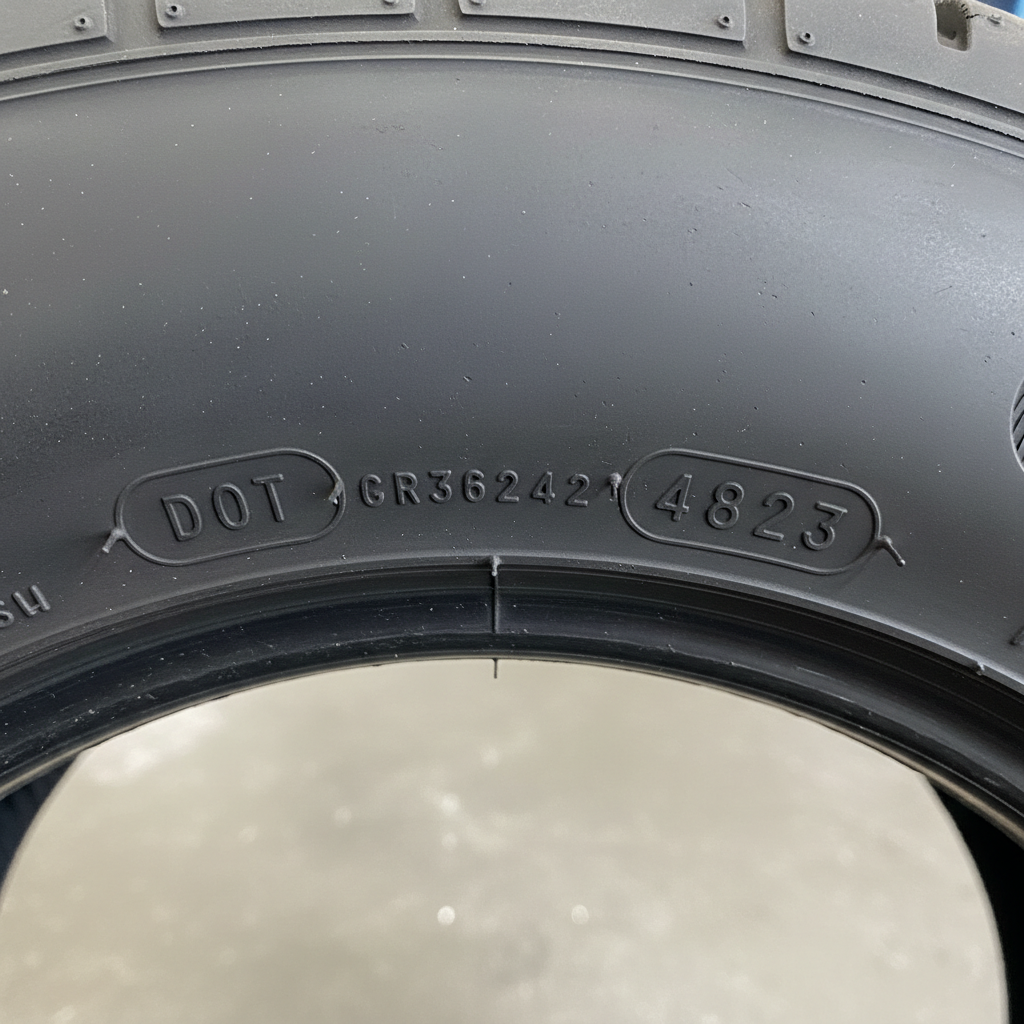
Finding and Decoding the DOT Date Code on Any Tire
Every tire sold in the United States carries a Department of Transportation (DOT) identification number molded into the sidewall. This code contains information about where the tire was manufactured, its specifications, and, most importantly for consumers, when it was made. The manufacture date is the last four digits of the DOT code, and learning to read it takes less than a minute. That minute of knowledge could save you from installing tires that are too old to be safe.
Where to Find the DOT Code
The DOT code is stamped into the rubber on the sidewall of the tire, near the rim. It begins with the letters "DOT" followed by a series of characters. The full code, including the date portion, is required to appear on at least one sidewall of the tire. Here is where it gets tricky: many tires only have the complete code on one side. The other side may show a partial code without the last four digits.
On most vehicles, the full DOT code faces the inside of the vehicle, toward the center, rather than outward. This means you may need to look at the inward-facing sidewall to find the date code. On some tires, you can see it by turning the steering wheel to full lock and looking at the front tires. On others, you may need to crouch down and look at the inner side, or the vehicle may need to be on a lift for full visibility.
The code appears as a series of raised or recessed characters in the rubber. It may be in a rectangular indentation to make it easier to locate. Look for the letters "DOT" followed by a combination of numbers and letters. The entire code is typically 11 to 13 characters long.
How to Decode the Date
The date of manufacture is encoded in the last four digits of the DOT code. These four digits represent the week and year of production.
The first two digits indicate the week of the year, from 01 (the first week of January) to 52 (the last week of December). The last two digits indicate the year. For example:
DOT XXXX XXXX 1521 means the tire was manufactured in the 15th week of 2021, which is approximately mid-April 2021.
DOT XXXX XXXX 3219 means the tire was manufactured in the 32nd week of 2019, which is approximately early August 2019.
DOT XXXX XXXX 0824 means the tire was manufactured in the 8th week of 2024, which is approximately late February 2024.
The characters before the date code identify the manufacturing plant and tire specifications. While useful for tracking recalls and production information, the date is the most important piece of information for consumers evaluating tire safety.
Tires Manufactured Before 2000
Before the year 2000, the date code used only three digits: two for the week and one for the year. A code ending in 259 could mean the 25th week of 1989 or the 25th week of 1999. There was no way to distinguish between decades. Some manufacturers added a triangle symbol after the code to indicate a 1990s production date, but this was not universal.
If you encounter a tire with a three-digit date code, the tire is at minimum 26 years old and should be replaced immediately regardless of its appearance. No tire from the 1990s or earlier should be in service today.
Why the Manufacture Date Matters
Tire rubber degrades over time through a process called oxidation. Oxygen molecules interact with the polymer chains in the rubber compound, causing them to break down. This process occurs even when the tire is not being used. Heat, UV exposure, and ozone accelerate it, but it happens in all conditions, including climate-controlled storage.
As the rubber ages, it loses flexibility and grip. The tire becomes harder and more prone to cracking. The adhesion between the internal layers weakens, increasing the risk of tread separation, a catastrophic failure where the tread peels away from the tire body, typically at highway speed.
Most tire manufacturers recommend replacing tires at six years from the date of manufacture, regardless of remaining tread depth. Some organizations allow up to ten years as an absolute maximum with regular inspections after year five. For a detailed explanation of how age affects tire performance, see our article on tire age vs. tread depth.
Checking Date Codes When Buying New Tires
New tires are not always freshly manufactured. They may have been produced months or years before reaching the retailer. Tire distributors maintain warehouses of inventory, and slower-moving sizes or brands may sit in stock for extended periods.
When purchasing new tires, check the DOT date code before leaving the shop. Tires manufactured within the past year are ideal. Tires up to 18 months from their manufacture date are generally considered acceptable. If you find that the new tires being installed are more than two years from their manufacture date, ask the dealer about it. Most reputable dealers will understand the concern and may be able to provide fresher stock.
You should not pay full price for tires that have been sitting in a warehouse for three or four years. Even though they are technically new and unused, the aging process has already been underway for a significant portion of the tire's useful life. If a dealer cannot provide fresher stock, negotiate a discount that reflects the reduced remaining service life.
Checking Date Codes on Used Tires
If you are considering purchasing used tires, the date code check is absolutely essential. The used tire market includes tires of all ages, and sellers do not always disclose the manufacture date. A used tire with plenty of tread but a date code from seven years ago is not a bargain. It is a liability.
Check every used tire's date code before agreeing to purchase. If the code is not visible because the inner sidewall is facing the seller's rack or wall, ask them to flip the tire so you can read it. If a seller cannot or will not show you the date code, walk away. For more guidance on evaluating used tires, see our guide on what to ask before buying used tires.
Checking Your Spare Tire
Your spare tire ages at the same rate as the tires on your vehicle, and in some cases faster because it may be stored in a location exposed to heat, such as under the vehicle or in the trunk near the exhaust. Many drivers never check their spare tire's age because they rarely look at it.
Check your spare tire's DOT date code today. If it is more than six years old, replace it. A flat tire on the highway is stressful enough without discovering that your spare is a 12-year-old tire that may not be safe to drive on.
Recording and Tracking Tire Dates
When you install new tires, record the DOT date codes in your vehicle maintenance log, your phone's notes app, or wherever you keep service records. Knowing when your tires were manufactured without having to crawl under the car makes it easy to track their age over time.
Some digital vehicle inspection platforms used by repair shops will record tire date codes as part of their standard inspection. If your shop provides this service, your tire ages will appear on each inspection report, giving you a clear timeline for planning replacement.
Set a calendar reminder to check your tire date codes once a year, perhaps at the same time you check your spare tire or rotate your tires. As your tires approach the five-year mark from their manufacture date, start planning and budgeting for replacement so you are not caught off guard by a suddenly urgent need.
A Simple Habit That Protects You
Reading a tire date code is one of the simplest safety checks a vehicle owner can perform. It requires no tools, no technical knowledge, and less than five minutes. Yet the information it provides can prevent you from driving on tires that are structurally compromised by age, buying used tires that should never go back on a vehicle, or discovering that your spare tire is too old to be trusted when you need it most. Make the date code check part of your regular tire evaluation routine.