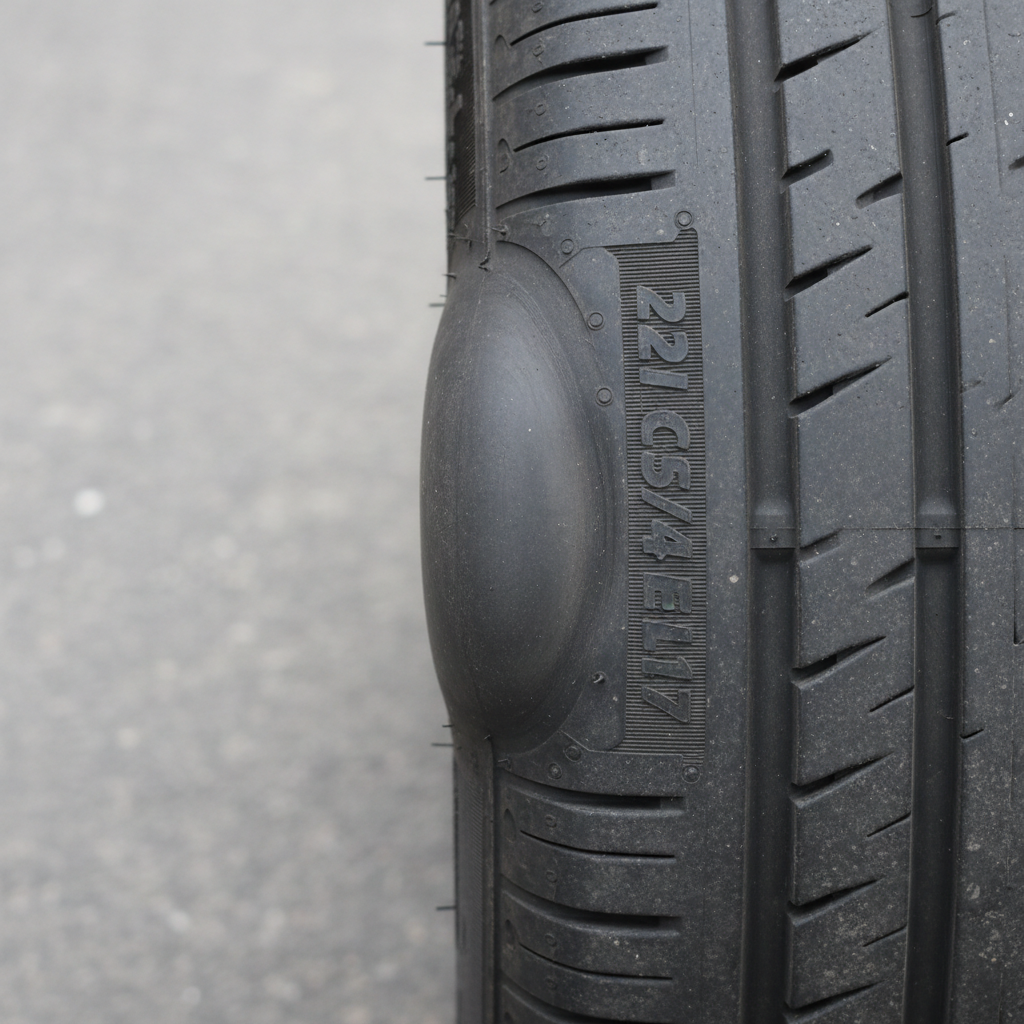
Understanding Sidewall Bulges and Why They Require Immediate Tire Replacement
A bulge in the sidewall of your tire looks like a bubble or blister pushing outward from the tire's surface. It may be small, the size of a marble, or it may be larger and more obvious. Regardless of its size, a sidewall bulge is one of the most serious tire conditions you can encounter. It means the internal structural layers of the tire have been damaged, and the only thing containing the air pressure at that point is the thin outer rubber layer. A sidewall bulge can lead to a sudden blowout at any speed, at any time, with no warning.
This article explains what causes sidewall bulges, why they cannot be repaired, and what you should do if you find one on your vehicle.
How a Tire Sidewall Is Constructed
To understand why a bulge is so dangerous, you need to understand what the sidewall is made of. A tire is not a simple rubber balloon. It is a complex assembly of multiple layers, each serving a specific structural purpose.
The innermost layer is the inner liner, an airtight rubber layer that holds the air pressure inside the tire. Above that are the body plies, which are layers of fabric cords (usually polyester or nylon) coated in rubber. These plies give the tire its shape and structural strength. In the tread area, steel belts sit above the body plies to provide rigidity and protect against punctures. But in the sidewall, there are no steel belts. The body plies are the primary structural element.
The outer rubber layer that you see and touch is relatively thin and serves primarily as a protective covering for the structural layers underneath. It is not designed to contain air pressure on its own. Its job is to shield the body plies from road debris, UV radiation, and weathering.
What Causes a Sidewall Bulge
A sidewall bulge forms when the body plies inside the sidewall are broken or separated. When these structural cords fail, they can no longer contain the air pressure at that point. The air pushes the outer rubber layer outward, creating the visible bulge. Several events can cause this damage:
Pothole impact. This is the most common cause. When a tire hits a pothole at speed, the sidewall gets pinched between the edge of the pothole and the wheel rim. This impact can sever the internal body ply cords without leaving any visible mark on the outer rubber. The bulge may appear immediately or may develop over the following days as the damaged area weakens under repeated inflation cycles.
Curb strikes. Hitting a curb, particularly at an angle or at speed, concentrates force on a small area of the sidewall. This can damage the body plies in the same way a pothole does. Parallel parking incidents, turning too tightly against a curb, and misjudging a curb height can all cause internal damage.
Speed bumps taken too fast. Speed bumps are designed to be driven over slowly. Taking them at higher speeds creates an impact that compresses the sidewall against the rim, potentially breaking internal cords.
Manufacturing defect. In rare cases, a sidewall bulge can result from a defect in the tire's construction, where the body plies were not properly bonded or positioned during manufacturing. If a bulge appears on a relatively new tire with no history of impact, a manufacturing defect should be considered and the tire returned to the dealer for warranty evaluation.
Driving on a flat or severely underinflated tire. Running a tire with insufficient air pressure causes the sidewall to flex far beyond its design limits. This excessive flexing generates heat and can break the body ply cords. Even a short drive on a flat tire can cause irreparable internal damage. This is why tire manufacturers recommend against driving on a flat tire and why many modern vehicles come with tire repair kits or run-flat tires instead of spare tires.
Why a Sidewall Bulge Cannot Be Repaired
Tire repairs are possible for punctures in the tread area because the tread has steel belts that provide structural support even with a small hole patched through them. The sidewall has no steel belts. It relies entirely on the body plies for its structural integrity.
Once the body plies are broken, there is no way to restore the sidewall's original strength. A patch or plug cannot replace the structural function of the severed cords. The air pressure inside the tire, typically 30 to 35 PSI in a passenger vehicle, continuously pushes against the weakened area. Any attempted repair would be under constant stress and could fail at any moment, particularly under the additional stresses of cornering, braking, or high-speed driving.
No reputable tire shop will attempt to repair a sidewall bulge. Industry guidelines from the Rubber Manufacturers Association and the Tire Industry Association both classify sidewall damage as non-repairable. If a shop offers to repair a sidewall bulge, find a different shop.
The Blowout Risk
A sidewall bulge is essentially a tire in the process of failing. The thin outer rubber layer is all that stands between the internal air pressure and a sudden, explosive loss of air. That layer was never designed to bear this load. It can fail at any time, and several factors can accelerate the failure:
Heat. Highway driving generates heat in the sidewall from flexing. Heat weakens rubber and can cause the already-compromised area to fail. This is why blowouts from sidewall damage often occur at highway speed rather than around town.
Load. A heavily loaded vehicle puts more stress on the sidewall. Carrying passengers and cargo, towing a trailer, or hitting a bump at speed all increase the load on the damaged area.
Time. The damaged area does not heal or stabilize. It generally gets worse as the remaining rubber stretches and weakens under continuous pressure. A small bulge today can become a larger bulge next week and a blowout the week after.
A blowout at highway speed is one of the most dangerous events a driver can experience. The sudden loss of air pressure causes the vehicle to pull sharply toward the affected side. If the blowout occurs on a front tire, steering control is immediately compromised. If it occurs on a rear tire, the vehicle may fishtail or spin. In either case, the driver must react correctly and immediately to avoid a collision, and many drivers are not prepared for that situation.
What to Do If You Find a Sidewall Bulge
If you discover a bulge on your tire sidewall during a visual inspection, do not drive the vehicle. Replace the tire with your spare (checking the spare's condition and age first) and take the damaged tire to a shop for replacement. If you do not have a spare, have the vehicle towed or use a roadside assistance service.
If a shop discovers a sidewall bulge during an inspection or tire service, they should flag it as an immediate safety concern requiring same-day replacement. This is a red-category finding with no room for deferral.
If you discover a bulge while driving, reduce your speed gradually, avoid sudden braking or sharp turns, and get off the road as soon as safely possible. The less stress you put on the damaged tire, the better your chances of reaching a safe stopping point without a blowout.
Prevention
You cannot eliminate the risk of sidewall damage entirely, but you can reduce it significantly. Maintain proper tire inflation, which helps the sidewall resist impact damage. Slow down for potholes and speed bumps. Avoid driving over curbs. Be cautious in construction zones where road hazards are common. Inspect your tires regularly, including the inner sidewall, for bulges, cuts, and deep scuffs.
When you hit a significant pothole or curb, inspect the tire as soon as possible. Damage may not be visible immediately, but checking within a day or two can catch a developing bulge before it becomes a highway blowout. If you hit a pothole hard enough to feel it through the vehicle, pull over when safe and check the affected tire visually. A two-minute check could prevent a life-threatening situation.