Everything a Pre-Purchase Inspection Should Cover Before You Buy a Used Car
Buying a used car is one of the largest purchases most people make, and it carries significant risk. Unlike a new car with a manufacturer warranty and zero miles on the odometer, a used vehicle comes with a history that may include accidents, deferred maintenance, hidden damage, and worn components that are close to failure. A test drive and a vehicle history report can only tell you so much. A pre-purchase inspection performed by an independent mechanic is the single best tool you have to understand what you are actually buying.
Why You Cannot Skip This Step
A vehicle history report is useful but limited. It records accidents that were reported to insurance companies, title events, and some service records. It does not tell you about accidents that were paid for out of pocket, maintenance that was skipped, or wear that has accumulated from years of use. A clean history report does not mean a problem-free vehicle. It means no problems were recorded in the databases the report draws from.
A test drive reveals certain issues, particularly unusual noises, vibrations, and obvious handling problems. But a 15-minute drive around the block will not tell you that the brake pads are at 2mm, the tire date codes are from 2018, the CV boots are torn, or the coolant is contaminated. Those findings require a trained technician with the vehicle on a lift.
The cost of a pre-purchase inspection ranges from $100 to $250 at most independent shops. The cost of a major repair you did not know about when you bought the car ranges from hundreds to thousands of dollars. The math is straightforward.
What a Thorough Pre-Purchase Inspection Covers
A proper pre-purchase inspection is comprehensive. It goes beyond what a state safety inspection requires and evaluates the vehicle's overall condition with an eye toward what will need attention in the near future. Here is what each section should include:
Exterior and body. The technician checks for signs of previous body work including paint texture differences between panels, misaligned gaps between doors and fenders, overspray on trim pieces, and evidence of filler or repair. They also check for rust, particularly in wheel wells, rocker panels, and undercarriage components. A magnet test on body panels can detect filler that was used to repair collision damage.
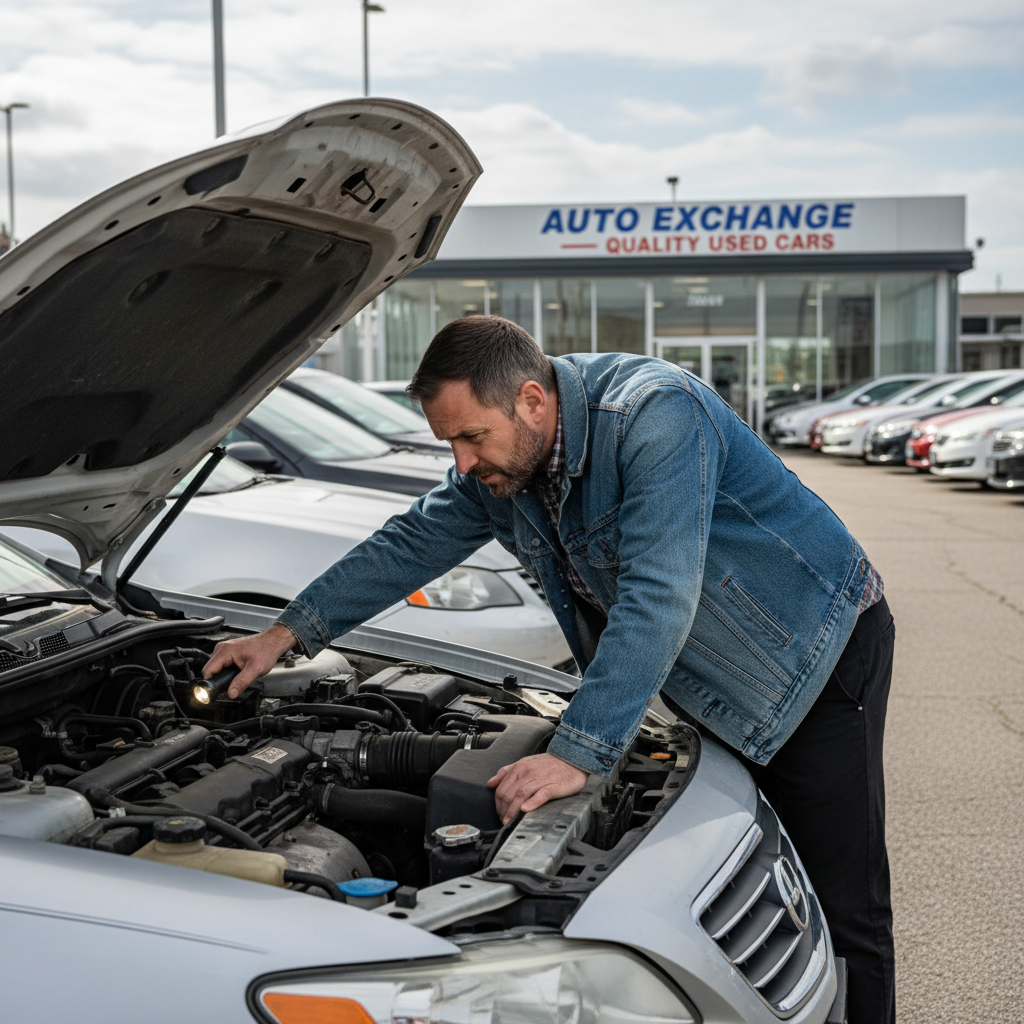
Engine and drivetrain. The engine is checked for oil leaks, coolant leaks, belt condition, hose condition, and abnormal noises. The technician will check the oil and coolant for contamination. Milky oil or oil in the coolant can indicate a head gasket issue, which is a major repair. The transmission is evaluated for shift quality, fluid condition, and any signs of slipping or harsh engagement.
Undercarriage. With the vehicle on a lift, the technician inspects the exhaust system, frame, subframe, and all undercarriage components for rust, damage, and previous repairs. Frame damage from a collision is a serious finding that may not be apparent from the exterior. Rust perforation in structural components is a safety concern that can be very expensive to address.
Suspension and steering. Each component is inspected and tested for wear. Ball joints, tie rod ends, control arm bushings, shocks, struts, and sway bar links are all checked. The technician will note any play, noise, or visible deterioration. Suspension components that are close to failure represent near-term costs that should factor into your purchase decision.
Brakes. Brake pad thickness is measured at all four corners. Rotors are measured for thickness and checked for condition. Brake lines and hoses are inspected for deterioration. Calipers are checked for leaks and proper operation. This section alone can reveal hundreds or thousands of dollars in upcoming brake service needs.
Tires. Tread depth is measured at multiple points on each tire. The DOT date code is recorded to determine tire age. Wear patterns are evaluated for signs of alignment or suspension problems. Sidewalls are checked for damage, cracking, and bulges. Tire condition tells you both about the tires themselves and about how the vehicle has been maintained.
Electrical systems. Lights, windows, locks, the charging system, and the battery are all tested. The technician will scan the vehicle's computer for stored diagnostic trouble codes, which can reveal problems that are not currently showing symptoms. A scan can find codes for emissions issues, transmission problems, sensor failures, and other concerns that the seller may not have mentioned.
HVAC and interior. The heating and air conditioning systems are tested for proper function. The interior is evaluated for wear, damage, and signs of water intrusion. Musty smells, damp carpet, or water stains in the trunk can indicate a leak that may point to poor body repair or deteriorated seals.
How to Arrange a Pre-Purchase Inspection
The process is straightforward. Find an independent repair shop that you trust, one that has no connection to the seller. Call ahead and explain that you want a pre-purchase inspection. Most shops can accommodate you within a day or two. You will need to bring the vehicle to the shop, which means either driving it there yourself or arranging with the seller to meet at the shop.
If a seller refuses to allow a pre-purchase inspection, that is a significant red flag. There is no legitimate reason to prevent a buyer from having a vehicle inspected by an independent mechanic. Private sellers and reputable dealerships alike should welcome the process because it protects both parties.
Some mobile inspection services will come to the vehicle's location. While convenient, these inspections are typically less thorough than a shop-based inspection because the vehicle cannot be put on a lift. If a lift inspection is not possible, a mobile inspection is better than nothing, but a shop-based inspection is the standard to aim for.
Reading the Results
A good pre-purchase inspection report categorizes findings by urgency. Safety concerns and items that need immediate attention should be clearly distinguished from maintenance items that are approaching service intervals and cosmetic issues that do not affect function.
No used vehicle is perfect. The goal of a pre-purchase inspection is not to find a car with zero issues. It is to know exactly what issues exist so you can make an informed decision. A vehicle with $1,500 in upcoming brake and suspension work might still be a good deal if the price reflects that need. A vehicle that appears to have been in a significant unreported collision is probably a deal to walk away from regardless of the price.
Use the inspection findings as a negotiation tool. If the inspection reveals $800 in brake work that was not disclosed, you have objective evidence to request a price reduction or to ask the seller to address the issue before the sale. This is not adversarial. It is how informed purchases should work.
What a Pre-Purchase Inspection Cannot Tell You
Even a thorough inspection has limitations. It evaluates the vehicle's condition at a single point in time. It cannot predict every future failure or guarantee that nothing will break next month. Internal engine wear, early-stage transmission problems, and intermittent electrical issues may not be detectable during a single inspection.
A pre-purchase inspection also does not typically include a compression test, leak-down test, or transmission fluid analysis unless you specifically request and pay for those additional diagnostics. For higher-value purchases or vehicles with high mileage, those additional tests may be worth the extra cost.
Despite these limitations, a pre-purchase inspection dramatically reduces your risk. It transforms a blind purchase into an informed one. For the $100 to $250 it costs, there is no better investment in a used vehicle purchase.