Why the Best Shops Are the Ones That Find the Most Problems
It sounds counterintuitive, but the best repair shop you can go to is the one that finds the most things wrong with your car. Not because they are inventing problems to sell you services, but because they are performing thorough inspections that catch issues in their early stages, when they are cheapest to fix and least dangerous to ignore. A shop that returns your vehicle with a clean bill of health every visit is either maintaining the world's most perfect vehicle or, more likely, not looking very carefully.
Reactive vs. Proactive Service
There are two fundamentally different approaches to vehicle maintenance, and the approach your shop takes determines how much you pay over the life of your vehicle and how reliably it serves you.
Reactive service means fixing things when they break. The customer comes in because something is wrong: a noise, a warning light, a failure. The shop diagnoses and repairs the immediate problem and sends the customer on their way. The next visit is triggered by the next problem. This is the minimum standard of service, and it is how many shops operate.
Proactive service means inspecting the entire vehicle during every visit and identifying problems before they reach the failure stage. The customer comes in for an oil change, and the shop performs a comprehensive inspection that reveals brake pads at 4mm, a coolant hose with surface cracking, and a tire with early inner edge wear. None of these items caused the visit. All of them are important to know about.
The difference in outcomes is significant. A driver using reactive service might drive on worn brakes until they hear grinding, by which point the rotors are damaged and the repair costs twice as much. A driver using proactive service gets warned when the pads hit 4mm and can plan a pad replacement before rotor damage occurs. The proactive driver pays less, has fewer surprise breakdowns, and drives a safer vehicle.
What Thorough Inspections Catch
A comprehensive vehicle inspection performed during routine service evaluates systems that the customer has no reason to think about. Here are examples of what proactive shops catch that reactive shops miss:
Early suspension wear. A ball joint that has developed slight play is not making noise yet and is not causing a noticeable handling change. But it is wearing, and in six months it might fail. A thorough inspection catches this at the "plan for it" stage rather than the "tow truck" stage.
Fluid degradation. Brake fluid absorbs moisture over time, lowering its boiling point. Coolant loses its corrosion-inhibiting properties. Transmission fluid breaks down and loses its ability to properly lubricate. None of these conditions cause immediate symptoms. They cause gradual damage that is expensive to repair once it reaches the failure point. A proactive shop tests fluid conditions and recommends service before damage occurs.
Tire condition details. A reactive shop will tell you when your tires are bald. A proactive shop will measure tread depth at multiple points, check for uneven wear patterns that indicate alignment or suspension issues, read the DOT date codes to evaluate tire age, and inspect sidewalls for damage. This level of detail catches problems early and identifies underlying causes that would continue to damage replacement tires if left unaddressed.
Belt and hose deterioration. Modern serpentine belts wear from the rib side, making visual inspection unreliable without a gauge. Coolant hoses deteriorate from the inside out, becoming soft and prone to failure with no external warning. A shop that checks these items with the appropriate tools catches them before a roadside failure.
Electrical system health. Battery voltage and cranking performance can be tested quickly with a battery tester. A battery that tests as marginal might start the car fine today but could fail with the first cold snap of winter. Identifying this in September gives you time to replace it on your terms rather than being stranded in a parking lot in December.
The Inspection Is the Foundation
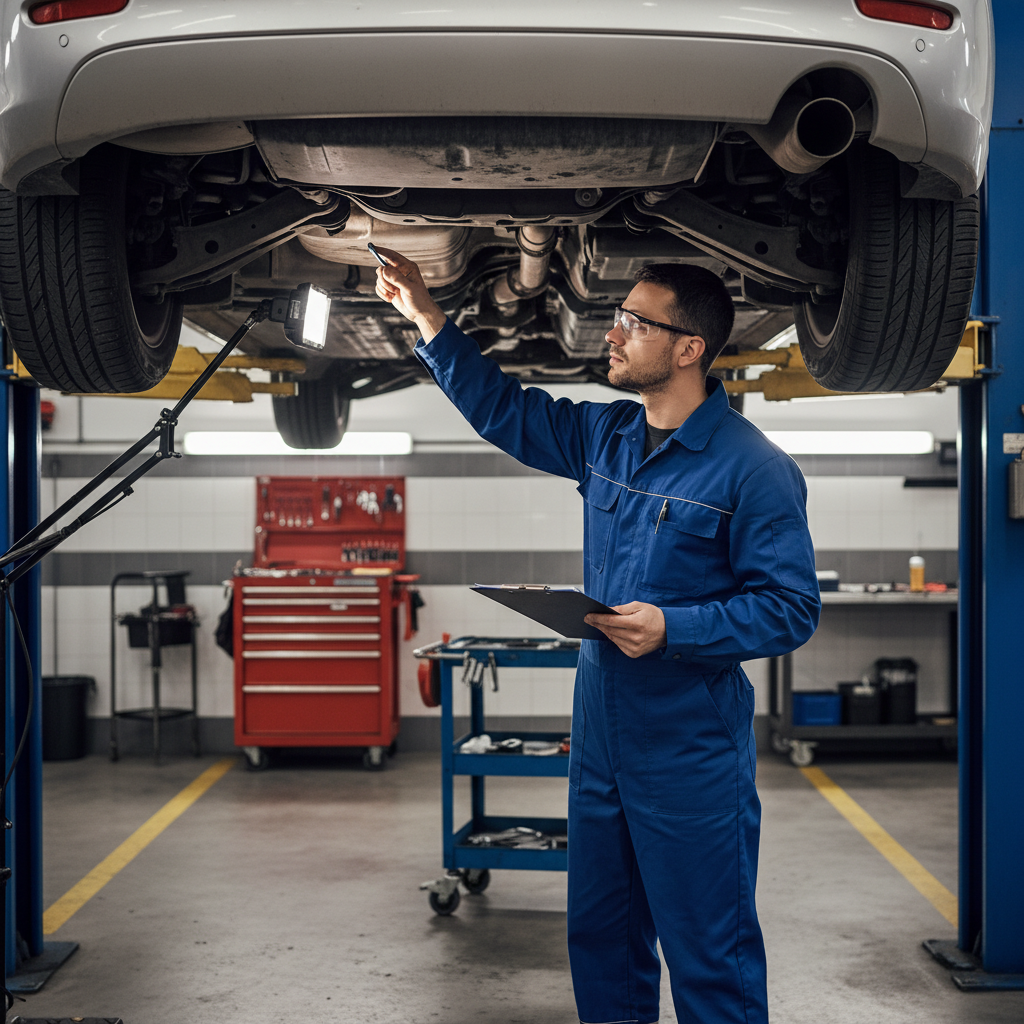
The quality of a shop's proactive service is directly tied to the quality of their inspection process. A thorough inspection at every service visit is what makes early detection possible. This means every oil change, every tire rotation, and every brake service should include a multi-point inspection of the vehicle's major systems.
A shop that performs thorough inspections will naturally find more items to report. This is not upselling. This is the inspection doing its job. The key distinction is in how the findings are presented. A good shop documents each finding with photos and measurements, categorizes them by urgency, and lets you decide how to proceed. They do not pressure you to approve everything immediately. They inform you of the vehicle's condition and help you plan your maintenance.
A shop that performs minimal or no inspections will appear to find fewer problems. Your visits will be quick and inexpensive. But the problems are still there, they are just not being detected. They continue to worsen until they announce themselves through noise, failure, or a warning light. At that point, the repair is almost always more expensive and more disruptive than it would have been with early detection.
How to Recognize a Proactive Shop
Several indicators distinguish proactive shops from reactive ones:
They inspect your vehicle during routine service. If you bring your car in for an oil change and receive a detailed inspection report along with the oil change receipt, you are at a proactive shop. If the only communication is "your oil change is done," the shop is operating reactively.
They use digital inspection tools. Shops that invest in digital inspection platforms are signaling their commitment to documentation and transparency. These tools make it easy for technicians to photograph and document findings and for customers to review them remotely.
They present findings with urgency categories. A shop that distinguishes between items needing immediate attention, items approaching service, and items in good condition is helping you prioritize rather than overwhelming you with a single list of needed work.
They track your vehicle's history. A shop that references your previous inspections when discussing current findings is using the historical data to provide context. "Your brake pads were at 6mm three months ago and are now at 4mm" is far more useful than just "your brake pads are at 4mm" in isolation.
They take time to explain. Proactive shops invest in communication because they understand that an informed customer is a better customer. They explain what they found, why it matters, and what the options are without rushing or pressuring.
The Cost of Prevention vs. the Cost of Failure
Every component on your vehicle is either being maintained or it is wearing toward failure. There is no third option. The question is not whether you will pay for your vehicle's maintenance. The question is whether you will pay a little at a time through proactive service or a lot all at once through reactive repair.
A coolant flush costs $100 to $150. A radiator replacement after corroded coolant eats through the tubes costs $400 to $800. A timing belt replacement at its scheduled interval costs $500 to $900. A timing belt failure that bends the valves costs $2,000 to $4,000 for engine repair. Brake pad replacement at 3mm costs $200 to $400 per axle. Brake pad and rotor replacement after metal-on-metal grinding costs $400 to $800 per axle.
The pattern is consistent across every system on the vehicle. Early intervention is always less expensive than failure repair. A good shop that finds problems early is not costing you more money. They are saving you money by catching issues when the repair options are simplest and cheapest.
Changing Your Perspective on Repair Recommendations
The next time your shop presents you with a list of findings from an inspection, resist the urge to see it as a sales pitch. Instead, view it as a maintenance roadmap. Not every item needs to be addressed today. But knowing what is coming allows you to plan, budget, and make informed decisions.
A shop that finds nothing is not giving you good news. They may be giving you no news. And no news, in the context of a complex machine with thousands of wearing parts, should make you wonder what they are missing rather than reassure you that everything is perfect. Find a shop that looks carefully, documents thoroughly, communicates clearly, and lets you decide. That is the standard every driver deserves.