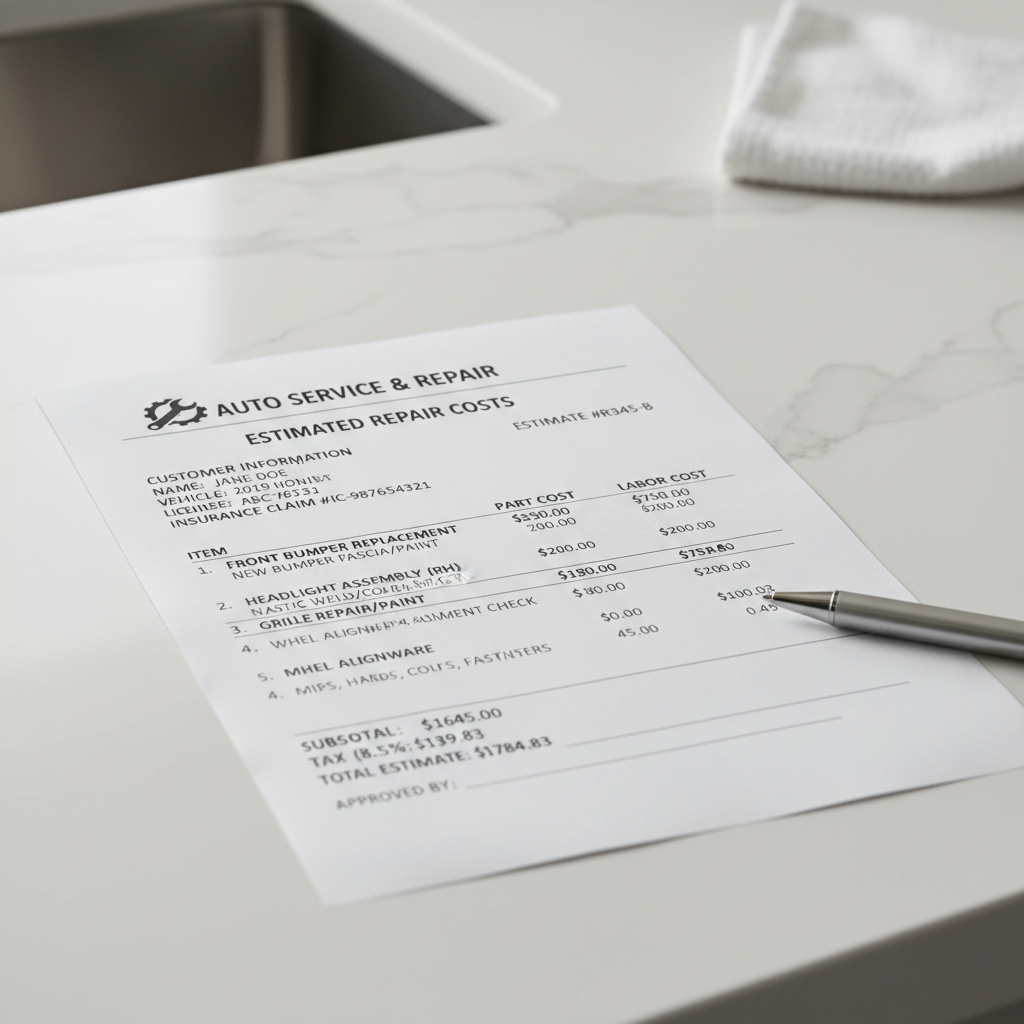
The Importance of Written Records in Vehicle Maintenance and Repair
Every time a technician inspects your vehicle, they observe a snapshot of its condition. Brake pad thickness, tire tread depth, fluid conditions, belt wear, suspension play, and dozens of other data points that describe where your vehicle stands at that moment. Without documentation, that snapshot exists only in the technician's memory, where it fades quickly and cannot be shared, compared, or referenced later. With documentation, it becomes a permanent record that serves both you and your shop in multiple important ways.
Why Documentation Matters for Vehicle Owners
Tracking wear rates. A single measurement tells you the current condition. Two measurements separated by time tell you the rate of change. If your brake pads measured 7mm in January and 4mm in July, you know they are wearing at approximately 0.5mm per month. That wear rate lets you predict when replacement will be needed, which lets you budget and plan. Without documented measurements from previous visits, every finding exists in isolation and every recommendation feels sudden.
Making informed decisions about declined services. When a shop recommends a repair and you decline it, documentation records both the recommendation and the vehicle's condition at the time of the recommendation. Six months later, when the same item appears with a more urgent rating, you have context. You can see how the condition has progressed and make a decision based on the trajectory rather than a single data point. Without that earlier record, you might wonder whether the shop is exaggerating urgency to close a sale.
Supporting warranty and insurance claims. If a component fails under warranty, having documented evidence that the issue was identified before the warranty expired strengthens your claim. If your vehicle is involved in an accident and a tire failure is suspected, documentation showing the tire's last inspected condition can be relevant to insurance proceedings. Records create evidence that verbal conversations do not.
Establishing maintenance history for resale. A complete maintenance history with documented inspections and repairs adds value to your vehicle when you sell it. Buyers pay more for vehicles with clear service records because those records demonstrate responsible ownership. A folder of detailed inspection reports is more convincing than a verbal assurance that the car was well maintained.
Why Documentation Matters for Shops
Legal protection. When a shop inspects a vehicle, identifies a safety concern, and documents both the finding and the customer's decision to decline the recommended repair, the shop has created a record that protects them if a related failure occurs later. Without documentation, a customer who declined brake service and later experienced brake failure might claim the shop never told them about the problem. Documentation establishes what was communicated and when.
Continuity of care. Vehicles do not always return to the same technician. Documentation ensures that whoever works on the vehicle next has access to the findings from previous visits. They can see what was recommended, what was approved, what was declined, and how conditions have changed. This continuity improves the quality of service and prevents oversights.
Building customer relationships. A shop that can reference your vehicle's history during a service conversation demonstrates attention and professionalism. "Last time you were here, your front brake pads were at 5mm. Today they are at 3mm, so it is time to schedule that brake service we discussed" is a far more compelling and trustworthy conversation than "your brakes need replacing."
Quality control. Documentation allows shop owners and managers to review the thoroughness of inspections performed by their technicians. If a technician consistently provides detailed, well-documented inspections, that quality is visible. If inspections are sparse or inconsistent, that is visible too. Documentation creates accountability.
What Should Be Documented
A comprehensive documentation practice covers several categories of information for every service visit:
Inspection findings. Every inspected component should have a recorded condition, ideally with a measurement where applicable and a photo where the condition is visual. Brake pad thickness, tire tread depth, fluid conditions, belt wear measurements, battery test results, and any observed damage or deterioration should all be recorded.
Condition categorization. Each finding should be categorized by urgency. The green, yellow, red system is the most common and most intuitive. Green items confirm that a component was checked and found to be in good condition. Yellow items indicate approaching service needs. Red items indicate immediate concerns.
Recommendations. What the shop recommends based on the findings, with specific details. Not "needs brake work" but "front brake pads at 3mm, recommend pad replacement, estimated cost $350" or "rear tires at 3/32 tread depth, recommend replacement before winter."
Customer decisions. Whether each recommendation was approved, declined, or deferred. This record is important for both the customer's planning and the shop's legal protection.
Work performed. Detailed records of all work completed, including parts used, specifications, and any relevant notes about the repair. Torque specifications applied, fluid types and quantities used, and part numbers all belong in the service record.
Paper vs. Digital Documentation
Paper inspection forms are better than no documentation at all, but they have significant limitations. Paper forms are difficult to share with customers, easy to lose, hard to search, and impossible to include photos. They also require the customer to be physically present to review findings, which limits the shop's ability to communicate effectively.
Digital documentation systems solve all of these problems. Inspection reports with photos and measurements can be sent to the customer's phone or email for review anywhere, anytime. Records are stored electronically and can be retrieved instantly for any future visit. Historical data can be compared side by side to show progression. And the reports are professional in appearance, which reflects well on the shop's brand.
The investment in digital documentation tools is modest compared to the benefits they provide. Most digital inspection platforms cost shops between $100 and $300 per month, which is easily recovered through improved approval rates and customer retention. For the customer, the benefit is entirely free: you get better information about your vehicle at no additional cost.
What to Do with Your Documentation
If your shop provides digital inspection reports, save them. Create a folder on your phone or computer for your vehicle's service records. Each report becomes part of your vehicle's maintenance history. Before your next service visit, review the previous report to remind yourself of any deferred items.
If your shop provides paper documentation, keep it. Store receipts and inspection forms in a folder or envelope in your glove box or at home. Even basic documentation is valuable when you need to reference it later.
If your shop provides no documentation, ask for it. Request a written summary of findings and recommendations. If the shop is unwilling or unable to provide written records, consider whether that level of service meets your needs. In a world where the technology for comprehensive documentation is affordable and widely available, the absence of documentation is a choice, and it is not a choice that serves the customer well.
Documentation as a Standard of Professionalism
Every other professional service industry documents their work. Your doctor records examination findings and treatment decisions. Your dentist documents X-ray results and procedure notes. Your accountant maintains records of every filing. Vehicle repair should be no different.
A shop that documents their work is operating at a professional standard. They are creating records that protect you, protect themselves, and improve the quality of service over time. A shop that does not document their work is operating on memory and verbal communication alone, which are unreliable and impossible to verify after the fact.
As a vehicle owner, you have the right to know the condition of your vehicle in writing. You have the right to a record of what was inspected, what was found, and what was recommended. You have the right to refer back to that record months or years later. Documentation is not a luxury. It is a baseline expectation of professional automotive service.