The Information You Deserve Before Saying Yes to Any Repair
You are on the phone with a service advisor. They have just listed several recommended repairs. They are asking if you want to proceed. Your natural instinct is to say yes because you trust them, or to say no because the total is more than you expected. Both reactions skip the most important step: understanding what you are approving and why.
A good repair shop does not just ask for your approval. They earn it by providing the information you need to make a confident decision. This guide outlines exactly what that information should include and what questions to ask if the shop does not volunteer it.
What Was Found
Before you can evaluate a repair recommendation, you need to know what prompted it. The shop should explain the specific finding that led to the recommendation, ideally with supporting evidence.
What you should hear: "Your front brake pads are at 3mm. I am sending you a photo showing the remaining pad material next to a measurement gauge."
What you should not accept: "Your brakes are getting low." Without a specific measurement, you cannot evaluate whether 3mm means urgent attention or another year of driving. The specific number matters because it connects to known thresholds that determine urgency.
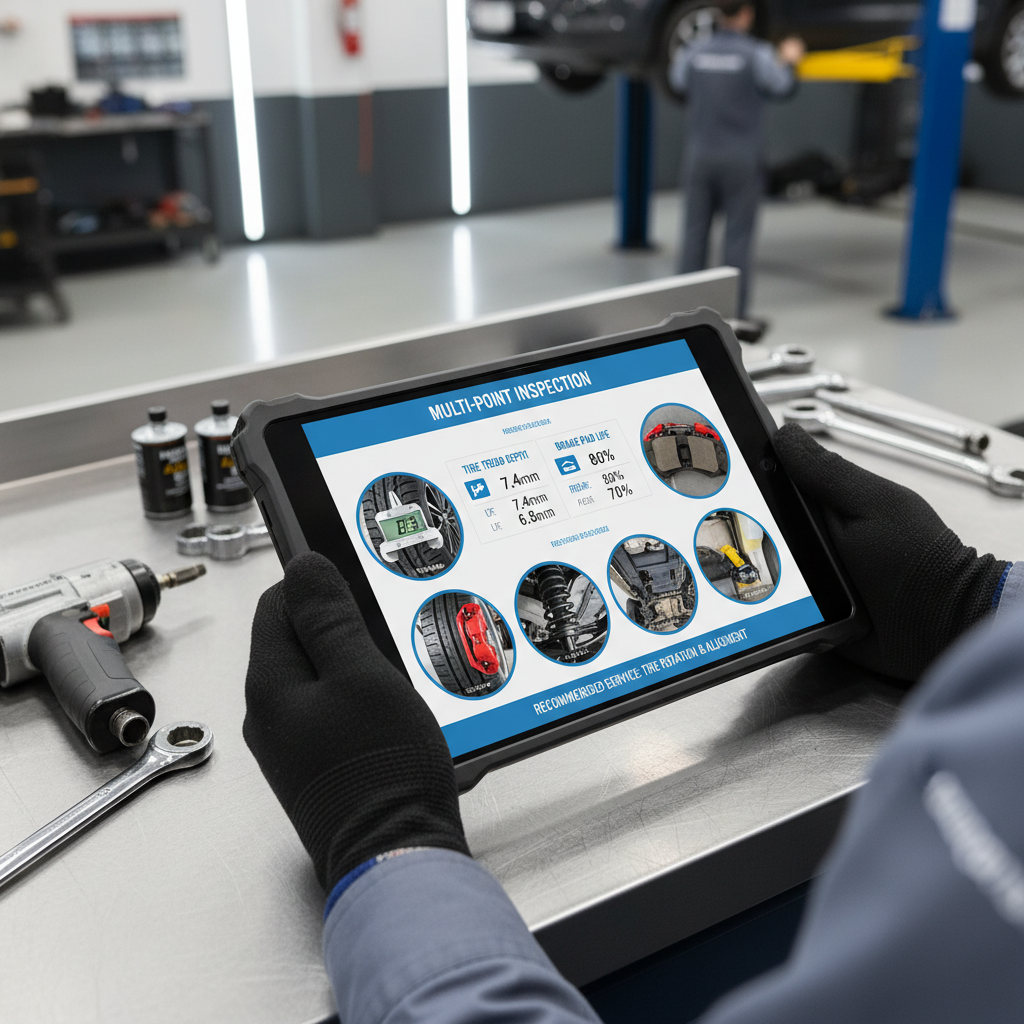
If the shop has performed a digital inspection, the findings should already be documented with photos and measurements in a report sent to your phone or email. Review that report before the phone conversation so you can ask informed questions.
Why the Repair Is Needed
A finding is not the same as a reason. The shop should explain the consequence of the condition, not just the condition itself.
What you should hear: "At 3mm, the brake pads will reach the metal backing plate within the next 2,000 to 3,000 miles of normal driving. Once the friction material is gone, the metal backing contacts the rotor directly, which damages the rotor surface and significantly increases the repair cost."
What you should not accept: "You need new brakes." This tells you the recommendation but not the reasoning. Without understanding the consequence of deferral, you cannot make a rational decision about timing.
The reason should connect the current condition to a specific outcome. "Your coolant is five years old and testing shows a depressed boiling point, which means it is not protecting against corrosion as well as fresh coolant. Continued use risks internal corrosion damage to the radiator and heater core, which are expensive to replace." That is a reason. "Your coolant needs flushing" is not.
How Urgent It Is
Not every repair needs to happen today. A good shop clearly communicates the urgency level so you can plan appropriately. As discussed in our article on urgent vs. can wait, repair recommendations generally fall into three categories: immediate safety concerns, upcoming service needs, and items in good condition.
What you should hear: "This is something we recommend addressing within the next 30 days. It is not a safety emergency today, but waiting longer risks additional damage that would increase the cost."
What you should not accept: "We really should do this today." Unless the condition is a genuine safety concern (such as a brake fluid leak, a sidewall bulge, or brake pads at 1mm), pressure to approve same-day work should prompt you to ask for more specific information about the urgency.
If you receive a long list of recommendations, ask the service advisor to help you prioritize. Which items are safety-related and need immediate attention? Which items are approaching service and should be scheduled within a few months? Which items are maintenance and can be planned for your next visit? A good shop will help you create a plan rather than presenting everything as equally urgent.
What the Repair Involves
You should understand what work is being done, even if you do not need to know every technical detail. The shop should explain the repair in terms you can understand.
What you should hear: "We will remove the front wheels, take out the old brake pads, resurface the rotors to give them a fresh surface, install new ceramic brake pads, lubricate the caliper hardware, and test-drive the vehicle to verify proper operation."
What you should not accept: "We will do a brake job." The level of detail does not need to be exhaustive, but you should know the key steps so you understand what you are paying for. "Brake job" could mean pad replacement only or pads, rotors, calipers, and hardware. The scope affects the cost and the outcome.
What Parts Are Being Used
Parts quality varies significantly, and the parts used affect both the cost and the longevity of the repair. The shop should tell you what brand or grade of parts they plan to install.
What you should hear: "We use Akebono ceramic brake pads, which are an OE-equivalent quality part with excellent noise and dust characteristics. The rotor resurface will bring your existing rotors back to a smooth surface."
What you should not accept: "We use good parts." This tells you nothing. Are they economy parts, mid-grade parts, or OE-equivalent parts? Different grades have different price points and different expected lifespans. You have the right to know what is going into your vehicle.
If the shop offers options at different price points, they should explain the trade-offs. Economy pads cost less but may produce more noise and dust and may not last as long. Premium pads cost more but offer better performance and longevity. The choice should be yours, informed by the shop's explanation of the differences.
What It Will Cost
The cost should be presented as a clear, itemized estimate before any work begins. You should see the breakdown of parts, labor, and any additional fees. The total should include tax so you know the actual amount you will pay.
What you should hear: "The total for front brake pads and rotor resurface is $380, which includes $140 for the pad set, $80 for the rotor resurface, $145 for labor, and $15 in shop supplies and tax."
What you should not accept: "It will be around $400." An approximation without a breakdown does not give you enough information to evaluate the cost or compare it with other options.
What Happens If You Wait
For non-urgent items that you are considering deferring, the shop should explain what to expect if you wait and when you should plan to return.
What you should hear: "If you defer the brake service, monitor for any squealing or grinding noise, which would indicate the pads have reached their wear indicators. Based on your current wear rate, we would recommend scheduling this within the next 60 days. Waiting longer than that risks rotor damage that would add approximately $200 to the repair."
What you should not accept: "Well, it is up to you." While the decision is indeed up to you, a good shop provides enough guidance for you to make an informed choice. Telling you the condition, the timeline, and the consequence of deferral is part of their professional responsibility.
What Warranty Comes with the Repair
Ask about the warranty on both parts and labor before approving the work. Most reputable shops warranty their work for at least 12 months or 12,000 miles. Some offer longer warranties, particularly on major repairs. Parts may carry a separate manufacturer warranty.
What you should hear: "Our brake work is warranted for 24 months or 24,000 miles, whichever comes first. The brake pads also carry a separate manufacturer warranty for their rated lifespan."
Knowing the warranty terms helps you evaluate the overall value of the repair and gives you confidence that the shop stands behind their work.
Using This Checklist at the Shop
The next time a shop calls with recommendations, use this checklist to evaluate the conversation. Did they explain what was found? Did they explain why it needs attention? Did they clarify the urgency? Did they describe the repair? Did they identify the parts? Did they provide a clear cost breakdown? Did they explain what happens if you wait? Did they mention the warranty?
If any of these elements are missing, ask for them. A professional shop will be happy to provide the information because they know that informed customers make better decisions and build stronger relationships. If asking reasonable questions is met with impatience or evasion, that tells you something about the shop's communication standards.
You are not being difficult by asking questions. You are being responsible. A good shop recognizes the difference and appreciates a customer who engages with the process rather than simply saying yes or no based on gut feeling.